
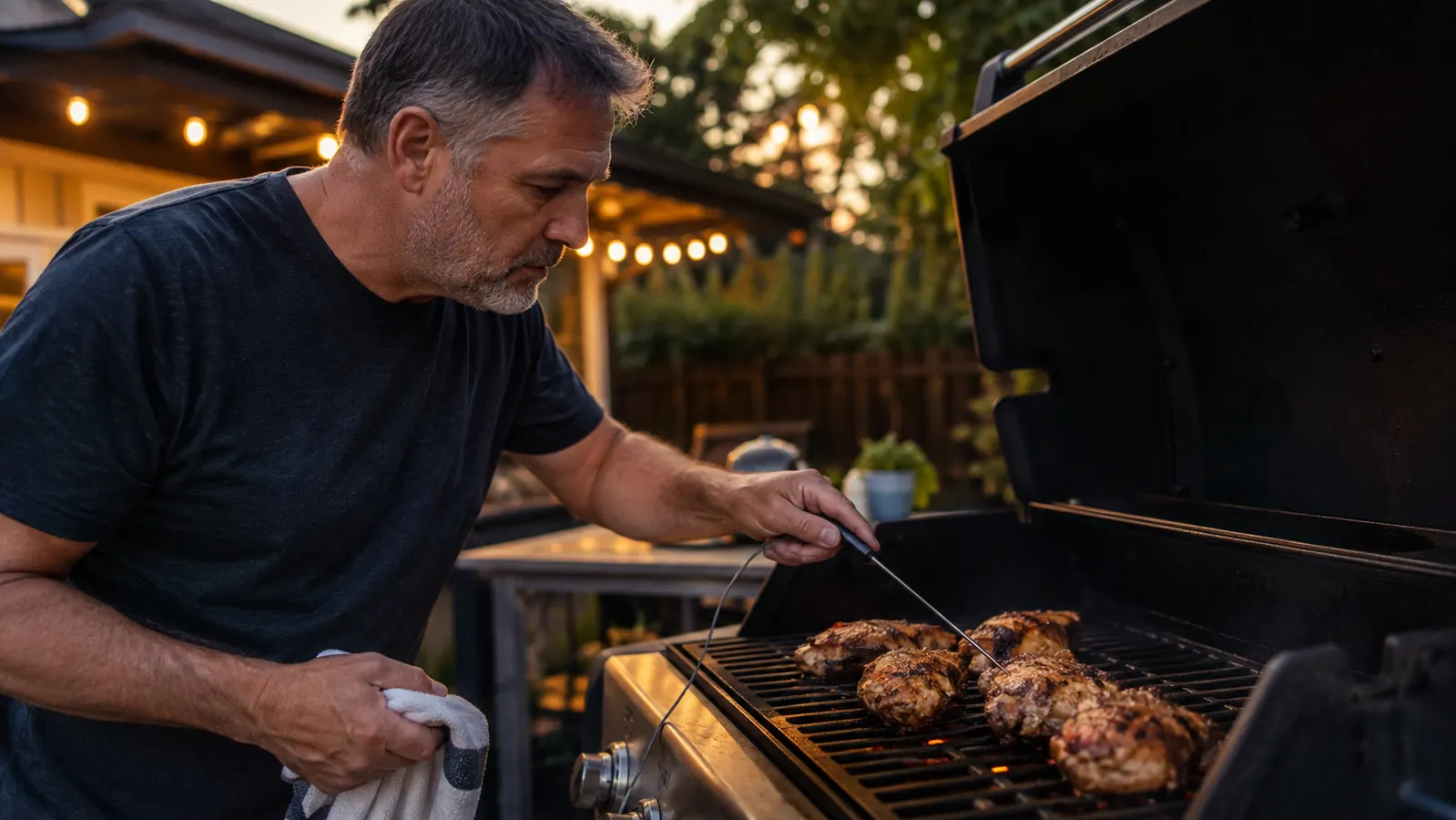
I bought my first TempPro TempSwift instant-read thermometer a little over six months ago, after cutting into a pork tenderloin at the dinner table because I didn't trust the color to tell me it was done. It had rested on the cutting board for a few minutes and looked right from the outside, and I still stabbed a knife into the thickest part in front of my family just to be sure. That's the moment that finally got me to stop guessing and start using a real instant-read thermometer instead of poking meat with a finger and hoping.
Six months, dozens of weeknight chicken breasts, several weekend pork roasts, one Thanksgiving turkey, and a lot of grilled thighs later, the TempPro TempSwift is still the tool I reach for before I reach for a knife. It's not fancy. It's a simple digital probe with a backlit screen, and that simplicity is most of the reason it's lasted this long in a kitchen drawer that has eaten plenty of gadgets that seemed clever in the store and useless by week three.
The Quick Verdict
A fast, accurate instant-read thermometer that earns permanent drawer space, though the folding probe and battery door feel like the cheapest parts of an otherwise dependable tool.
Amazon Check Today's Price →Stop Cutting Into Meat to Check If It's Done
If you're still guessing with a knife or a finger test, here's the instant-read thermometer that ended that habit in my kitchen.
Amazon Check Today's Price on Amazon →How I've Used It
I didn't buy this as a gift or an experiment. I bought it because I was tired of dry chicken breasts and pork that either scared me raw or came out chalky and overcooked. Since then it's lived in the utensil drawer closest to the stove, which is the drawer that only holds things I actually use every week.
The routine is almost always the same. Chicken breasts on a weeknight, usually two or three at a time in a cast iron pan or the oven at 400 degrees. Weekend pork tenderloin or a pork shoulder on the smoker. Burgers on the grill in summer, checked because ground meat is the one thing I'm not willing to eyeball. And once a year, the whole bird at Thanksgiving, checked in the thigh where the meat is thickest and where a pop-up timer always seemed to lie to me.
There's also a rhythm to it now that I didn't expect. Before dinner even starts, I set the thermometer on the counter next to the cutting board the same way I'd set out a spatula. It's become part of the setup, not an extra step I have to remember, and that's really the difference between a gadget that sees regular use and one that ends up buried in a drawer after the first month.
I also use it for things that have nothing to do with meat safety. Frying oil for chicken tenders needs to sit around 350 degrees before food goes in, and this thermometer reads oil just as fast as it reads a chicken breast. I've used it for candy a couple of times too, though I don't bake often enough to call that a regular use case.
What's Actually Inside the Box
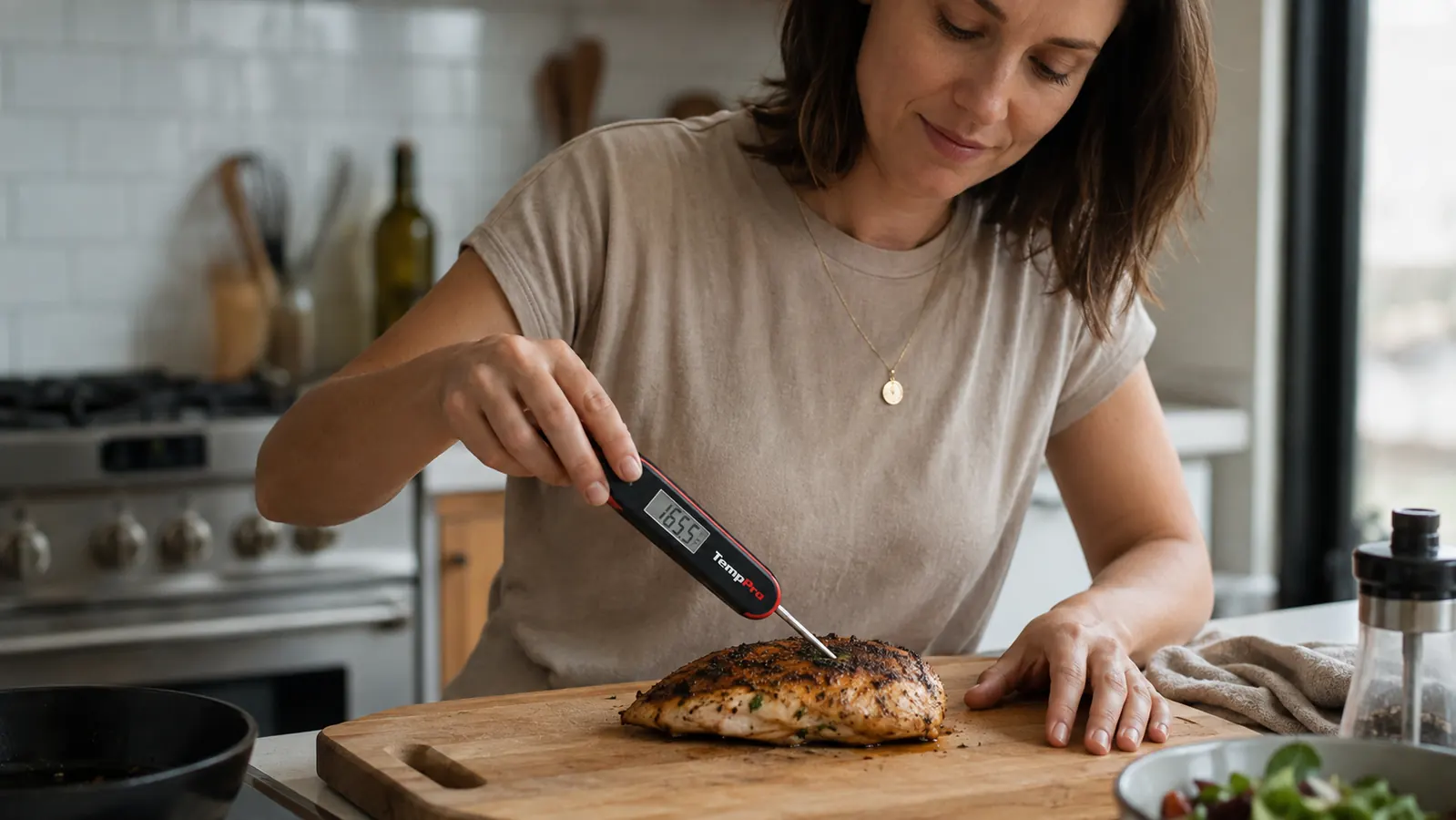
The TempPro TempSwift is a folding-probe instant-read thermometer. The probe swings out to take a reading and folds flat against the body when you're done, which is the design that keeps the tip from stabbing you in a drawer full of other utensils. The screen has a backlight, which sounds like a small thing until you're checking a thigh on the grill after dark and don't want to hold a phone flashlight in your teeth.
There's no cable, no separate base unit, and no app. You hold it, you insert the probe into the thickest part of the meat away from bone, and you read the number. That's the entire feature set, and after months of using kitchen gadgets that try to do five things at once, I've come to appreciate a tool that does one thing and does it fast.
The display is large enough to read at a glance across the kitchen, which matters more than it sounds like it would when your hands are covered in raw chicken and you don't want to touch your glasses to see a tiny screen clearly.
Speed and Accuracy Over Six Months
The number I care about most with any instant-read thermometer is how long I have to stand there holding a slippery, hot piece of meat while the display settles on a reading. This one reads fast enough that I don't lose patience halfway through and pull it out early, which used to be my actual failure mode with a slower thermometer I owned before this one.
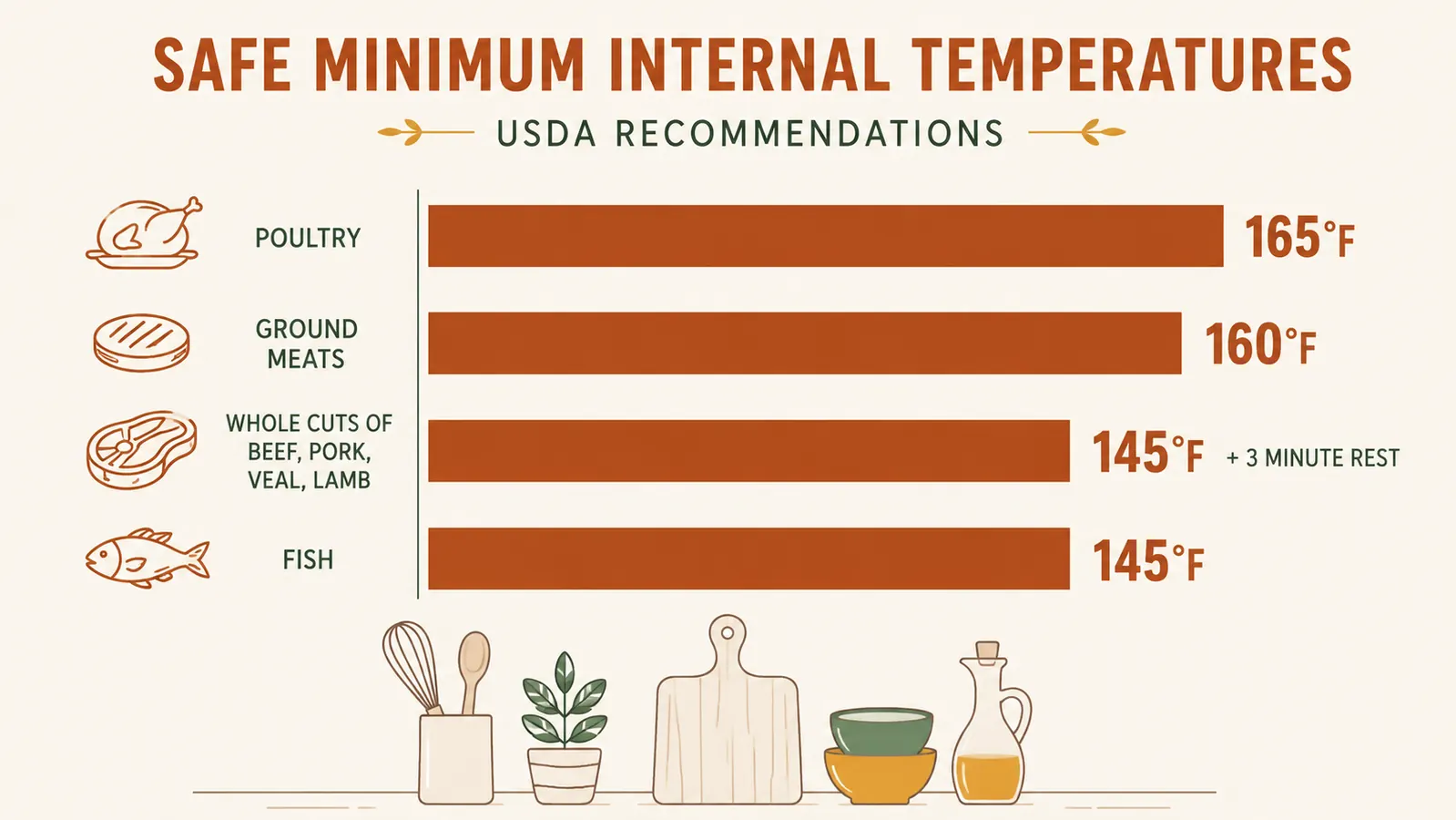
For safety, I go by USDA guidance rather than by feel. Poultry needs to reach 165 degrees Fahrenheit. Ground meats like burgers and meatloaf need to hit 160 degrees. Whole cuts of beef, pork, veal, and lamb are safe at 145 degrees followed by a three minute rest before cutting. Fish is done at 145 degrees. I don't treat any of that as optional, and having a thermometer that reads quickly enough to check without the meat cooling off in the meantime makes it much easier to actually follow those numbers instead of rounding down because I got impatient.
Cold weather changes things too. Grilling in late fall with a chilly wind cutting across the patio, I noticed the probe still gave a fast, stable reading, which wasn't something I could say for the slower thermometer I used before this one. That kind of consistency across seasons and weather is exactly what I wanted when I made the switch.
Where I've noticed the most value over time isn't any single dramatic save, it's the boring stuff. Chicken breasts that used to come out either pink near the bone or dry as cardboard now land right in that safe, juicy range almost every time, because I check at 160 and pull them to rest instead of guessing straight off the heat and watching carryover push them further than I wanted.
Cleanup and Everyday Care
Cleanup is about as simple as it gets. I wipe the probe down with a damp cloth and a little dish soap right after I use it, especially after raw chicken, and it's dry and put away before the pan is even off the heat. I don't run it through the dishwasher, mostly out of habit rather than any specific worry, since a quick hand wipe has always been enough to keep it looking and working like new.
Storage is the other place it's earned its keep. Folded shut, it's about the length of a large spoon and takes up almost no space lying flat in the drawer. That matters more than it sounds like it should in a kitchen where counter and drawer space are both limited, and where I've thrown out plenty of single-use gadgets specifically because they were bulky and hard to store.
Who I Reach for It On, and Who I Don't
This is a meat and fry-oil tool for me, not a baking tool. I reach for it constantly on chicken, pork, burgers, and anything on the grill or smoker, because those are the foods where guessing wrong means either a health risk or a ruined dinner. I don't reach for it on something like a roast I've made fifty times and could probably time by muscle memory at this point, though even then I'll usually double check the first time I try a new cut or a new size.
Before this, I tried getting by with a pop-up timer that came stuck in a store-bought turkey, and separately with a cheap analog dial thermometer that lived in a drawer and needed a full minute to settle on a number I still didn't fully trust. Neither gave me the confidence this does, and I've written more about that pop-up timer comparison specifically in TempPro Meat Thermometer vs Pop-Up Timer if you've ever had one of those little red timers pop early or late on you.

Where It Falls Short
The probe tip is thin, and after six months of regular use it still works fine, but I'm careful with it in a way I'm not careful with a chef's knife. It's not something I'd want to drop point-first onto a tile floor and expect to survive unscathed. The folding hinge also feels like the part most likely to wear out eventually, though it hasn't shown any looseness yet.
The battery door is the other spot that feels like a cost-cutting decision. It's a small plastic latch, and I can picture it being the piece that eventually breaks before anything else on the thermometer does. I haven't had that happen, but it's the part of the build I'd point to if someone asked me what to expect to wear out first.
The numbers on the display are easy to read most of the time, but direct sunlight on a bright afternoon can wash the screen out a little, and I've had to tilt it or shade it with my hand a couple of times while grilling on a sunny day. It's a minor annoyance, not a dealbreaker, but it's the kind of small thing you only notice after months of actually using something outdoors.
It's also just a single-purpose tool. It doesn't leave a probe in the oven while a roast cooks, and it doesn't alert you from another room the way a leave-in probe thermometer with a wireless base does. For a quick check on the stovetop or grill it's exactly what I want, but if you're the kind of cook who wants to walk away from a low-and-slow smoker for hours at a time, this isn't built for that job.
What I Liked
- Reads fast enough to check meat without losing your patience or letting it cool off
- Backlit display is genuinely useful for evening grilling
- Folds flat and fits easily in a utensil drawer
- Works just as well on fry oil as it does on meat
- Simple enough that there's nothing to learn or set up
Where It Falls Short
- Probe tip and hinge feel like the parts most likely to wear out over years of use
- Battery door latch feels like the cheapest piece of the build
- Screen can wash out a little in direct sunlight outdoors
- Not a leave-in probe, so it won't monitor a low-and-slow cook unattended
It's not a tool I think about. It's a tool I reach for automatically, and six months later that's still the best thing I can say about any kitchen gadget.
Who This Is For
This is for anyone who cooks chicken, pork, or burgers regularly and has ever cut into meat at the table to check if it's safe. If you've ever served something that turned out raw in the middle, or dried out a good cut of meat because you were scared of undercooking it, an instant-read thermometer like this one removes the guesswork entirely. It's also a good fit for anyone who grills or smokes regularly and wants a fast, no-fuss check that doesn't require a subscription app or a Bluetooth connection to your phone. It's a reasonable pickup too for anyone just starting to cook more from scratch and still building confidence with meat, since it replaces a lot of nervous guessing with one simple number you can trust. If you want the unfiltered version of where I think it comes up short, I go into more detail in TempPro Meat Thermometer: An Honest Review.
Who Should Skip It
If you already own a leave-in probe thermometer with a wireless base and you're happy with it, you probably don't need this as well, though plenty of people I know keep both because a leave-in probe and a quick instant-read check solve slightly different problems. And if you almost never cook meat that needs a temperature check, a folding probe thermometer is going to sit in a drawer more than it gets used, and that's not a great use of drawer space in a small kitchen.
The Thermometer That Ended My Guessing Games
Six months in, this is still the first thing I grab before chicken, pork, or anything off the grill. See today's price and reviews on Amazon.
Amazon Check Today's Price on Amazon →