
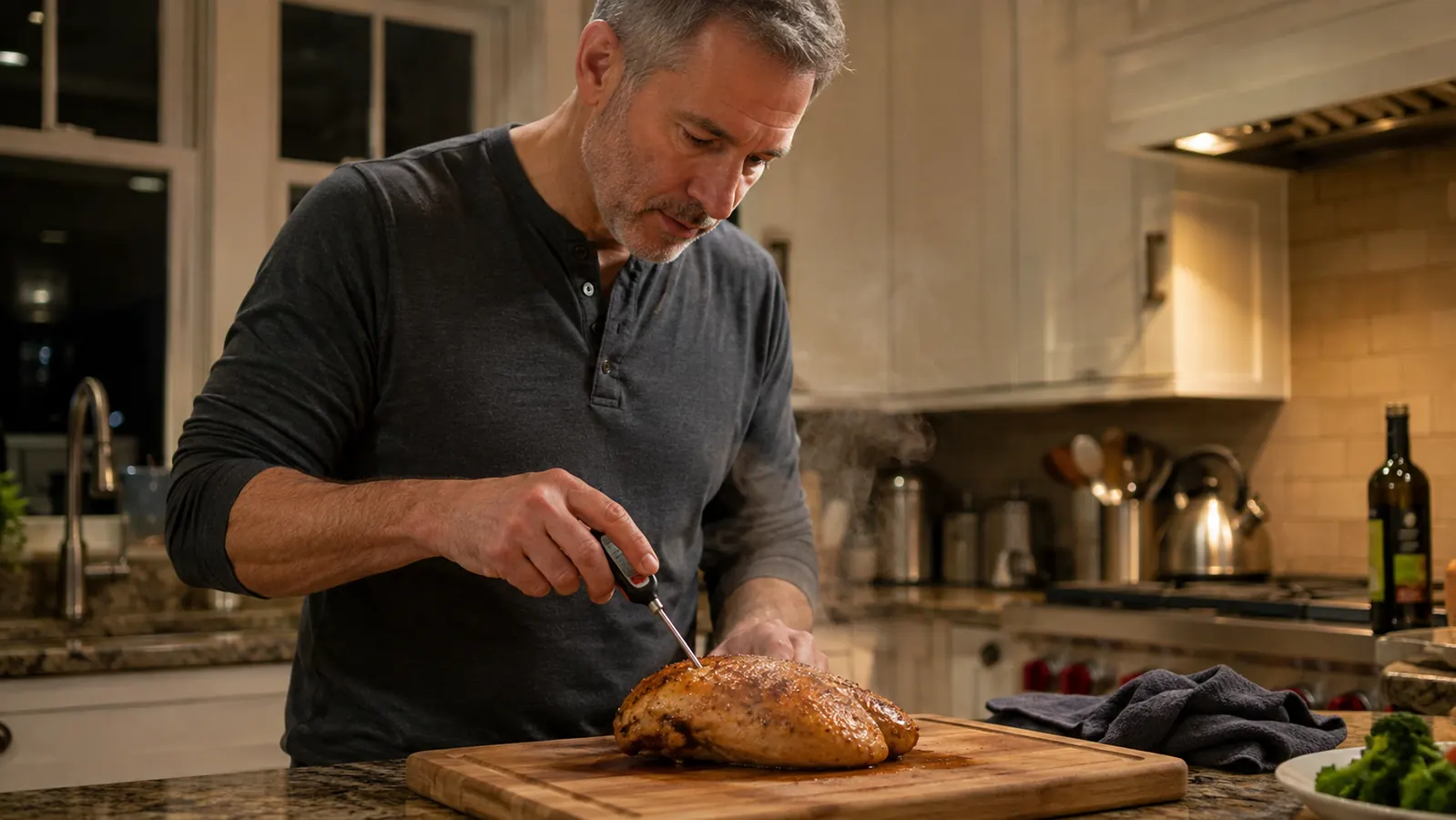
I spent years cutting into chicken breasts to check if they were done, which meant I was always guessing, and guessing wrong usually meant either raw in the middle or so overcooked it squeaked against the fork. The TempPro instant-read thermometer that now lives in my utensil drawer ended that guessing game completely. It's a small folding-probe gadget, not much bigger than a pen, and it turned out to be the single tool that fixed more dinners than any pan, knife, or recipe I've bought in years.
If you've never used one, it feels almost too simple to matter, you poke it into the meat and read a number. But that number is the difference between food that's safe and cooked right versus food that's either undercooked or dried out from overcorrecting. I go through the long-term details in my full TempPro thermometer review, but here are 10 real reasons this one specific thermometer keeps overcooked dinners off my table.
The gadget that ended my dry chicken streak for good
The TempPro TempSwift is a folding instant-read thermometer with a backlit display, small enough to keep in a drawer and fast enough to actually use every time you cook meat, poultry, or fish.
Amazon Check Today's Price on Amazon →It replaces cutting the meat open to check
Slicing into a chicken breast or a steak to peek at the color lets all the juice run out onto the cutting board before the meat has even rested, which is exactly what dries food out. With the thermometer, I poke one small hole, read the number, and if it's not there yet, the meat goes right back on heat with almost no juice lost. That single habit change did more for juicy chicken than any brining trick I ever tried.
It gives poultry an actual number to hit, not a guess
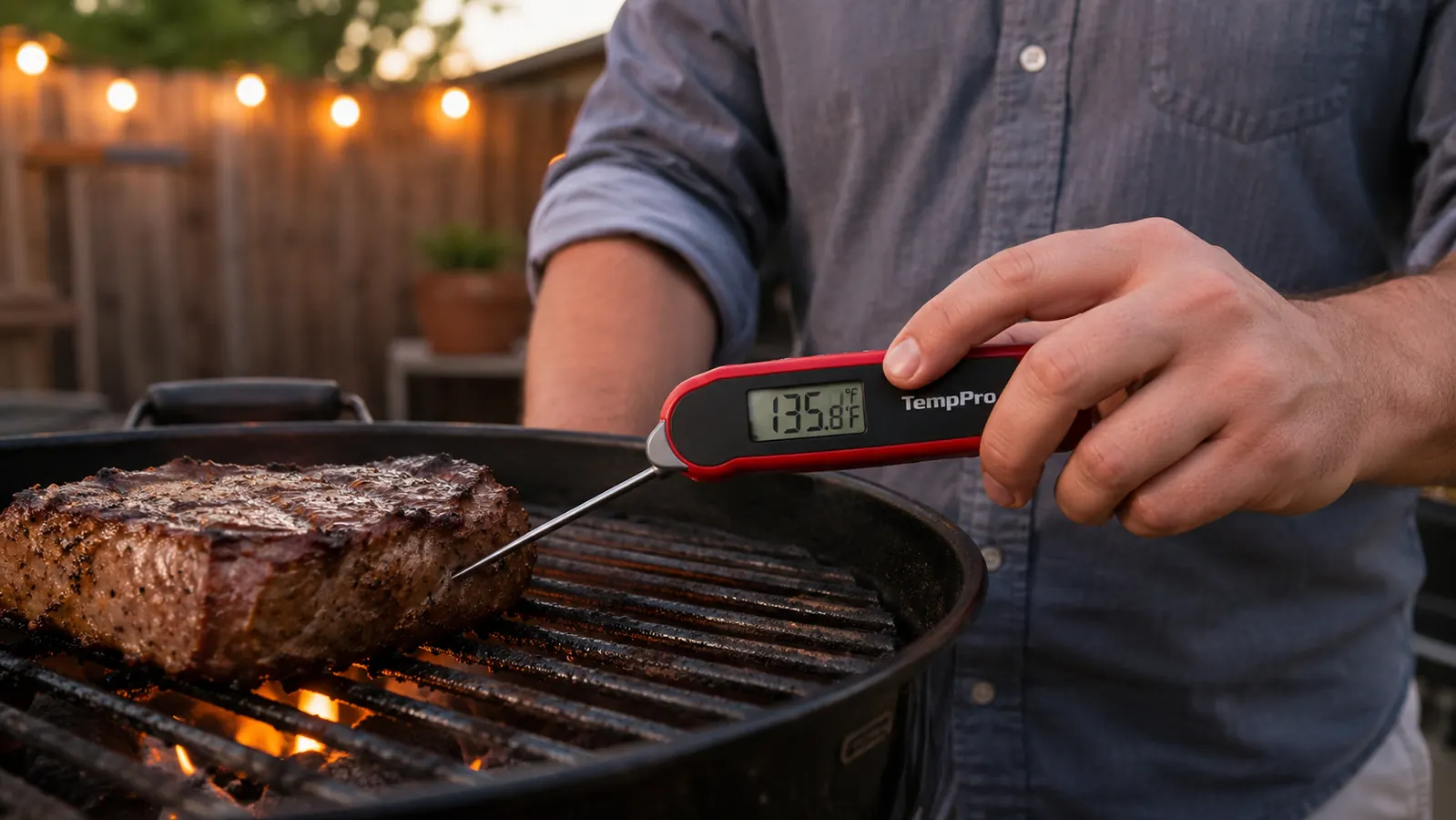
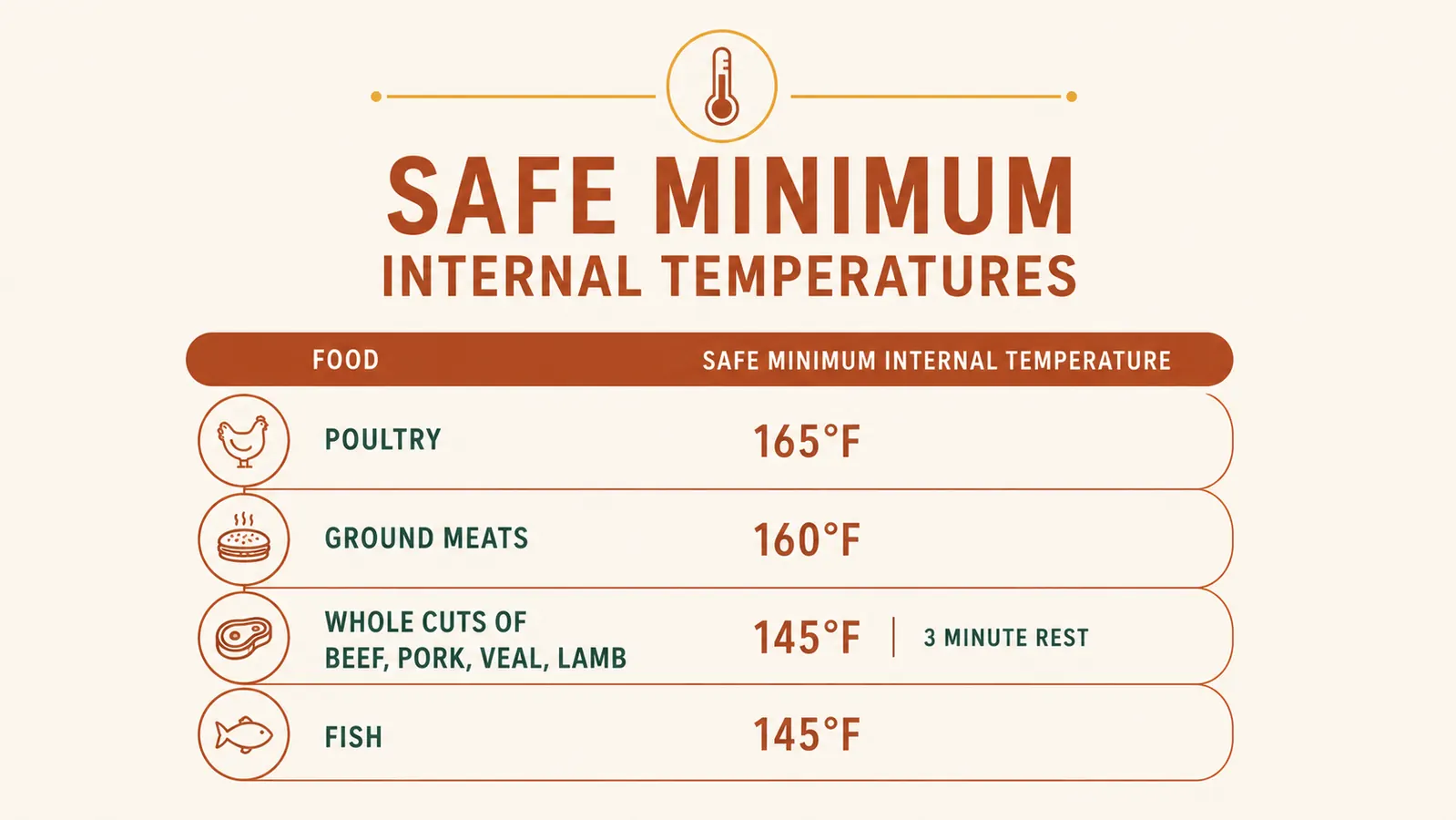
USDA guidance puts safe minimum internal temperature for poultry at 165F, and I used to just cook chicken until it looked done, which usually meant well past that number and into rubbery territory. Now I pull chicken breasts and thighs the moment the thermometer hits 165F in the thickest part, and they come out fully cooked without the extra ten minutes of insurance cooking I used to add out of nerves.
It stops the overcorrection cycle on steak and roasts
USDA guidance sets whole cuts of beef, pork, veal, and lamb at a minimum of 145F followed by a 3 minute rest. Before the thermometer, I'd undercook a roast, panic, shove it back in, and overshoot it into gray, dry meat by the second check. Now I pull whole cuts right around that number, let them rest, and the carryover heat does the rest of the work without me having to guess a second time.
It makes ground meat safety simple instead of stressful
Ground meats carry more surface area where bacteria can end up mixed through the whole patty or meatball, which is why USDA guidance sets ground meat at a minimum internal temperature of 160F, higher than a whole cut. Eyeballing color in a burger patty is genuinely hard because ground beef can look done at different stages depending on the fat content. The thermometer takes that judgment call away entirely, I just check the center of the thickest patty and stop worrying about it.
It keeps fish from turning chalky and dry
Fish goes from perfectly cooked to overdone faster than almost anything else I put on a pan, and USDA guidance places safe minimum internal temperature for fish at 145F. I used to lose salmon and cod to a minute or two of inattention because there's no obvious color change to watch for the way there is with meat. Checking the thickest part with the thermometer means I pull it the second it's actually ready, not after I've already dried it out watching for visual cues that never came.
The backlit display works when the grill light doesn't
Most of my worst overcooking mistakes happen at the grill after sunset, squinting at meat I can barely see. The TempPro's backlit screen means I can actually read the number in low evening light without pulling out my phone flashlight or guessing by feel. That alone has saved more than one weekend cookout from turning into charred chicken thighs handed to guests in the dark.
It works the same whether I'm grilling, roasting, or frying
The listing covers grill, smoker, oven, oil frying, and even candy making, and in practice I've used mine across all of those without switching tools. One thermometer checking a roast in the oven on Sunday and checking oil temperature for fried chicken on Friday means I'm not relying on a different method, and a different level of guesswork, for every cooking style I use during the week.
It's small enough to actually keep within reach
I owned a bulkier probe-and-cord thermometer years ago and it lived in a cabinet I rarely opened, so I stopped using it. The TempPro folds flat and fits in the same drawer as my measuring spoons, which means it's actually sitting there when I need it instead of buried somewhere I have to dig for. A thermometer only prevents overcooking if it's easy enough to grab that you actually reach for it every time, not just on holidays.
It rebuilt trust after a genuinely bad dry-chicken streak
There was a stretch of a few months where nearly every chicken dinner I made came out overcooked because I was so afraid of undercooking it that I just kept it on longer than it needed. I actually wrote up that whole embarrassing streak, and how the thermometer fixed it, in this story. Having an actual number to check instead of a fear-based guess changed how I cook meat on a basic, everyday level.
It takes the anxiety out of cooking for guests
Cooking meat for other people always raised my stress level, because overcooking felt embarrassing and undercooking felt risky, so I'd hover over the grill the whole time. Now I check the number, walk away, and check again a few minutes later, instead of babysitting the pan the entire cookout. That's turned hosting dinner from a source of dread into something I actually enjoy, because the doneness question isn't a guess anymore.
What I'd Skip
Don't expect this to work like a leave-in probe you set and forget in a low-and-slow smoker for hours, it's an instant-read tool, so you open the lid or the grill, take the reading, and close it back up rather than leaving the probe sitting inside the whole cook. I also wouldn't skip wiping the probe between checking raw chicken and then checking something else on the same plate, cross contamination is an easy habit to slip on when you're moving fast at the stove. And don't rely on it as your only step for food safety, it tells you the internal temperature accurately, but things like proper storage, thawing, and handling still matter just as much as the number on the screen.
I didn't get better at guessing when meat was done. I just stopped needing to guess at all.
Ready to stop overcooking dinner every other night?
The TempPro instant-read thermometer is the small, drawer-friendly tool that finally gave me a real number to trust instead of a fork and a hunch, and it's easy to find on Amazon at today's price.
Amazon Check Today's Price on Amazon →