
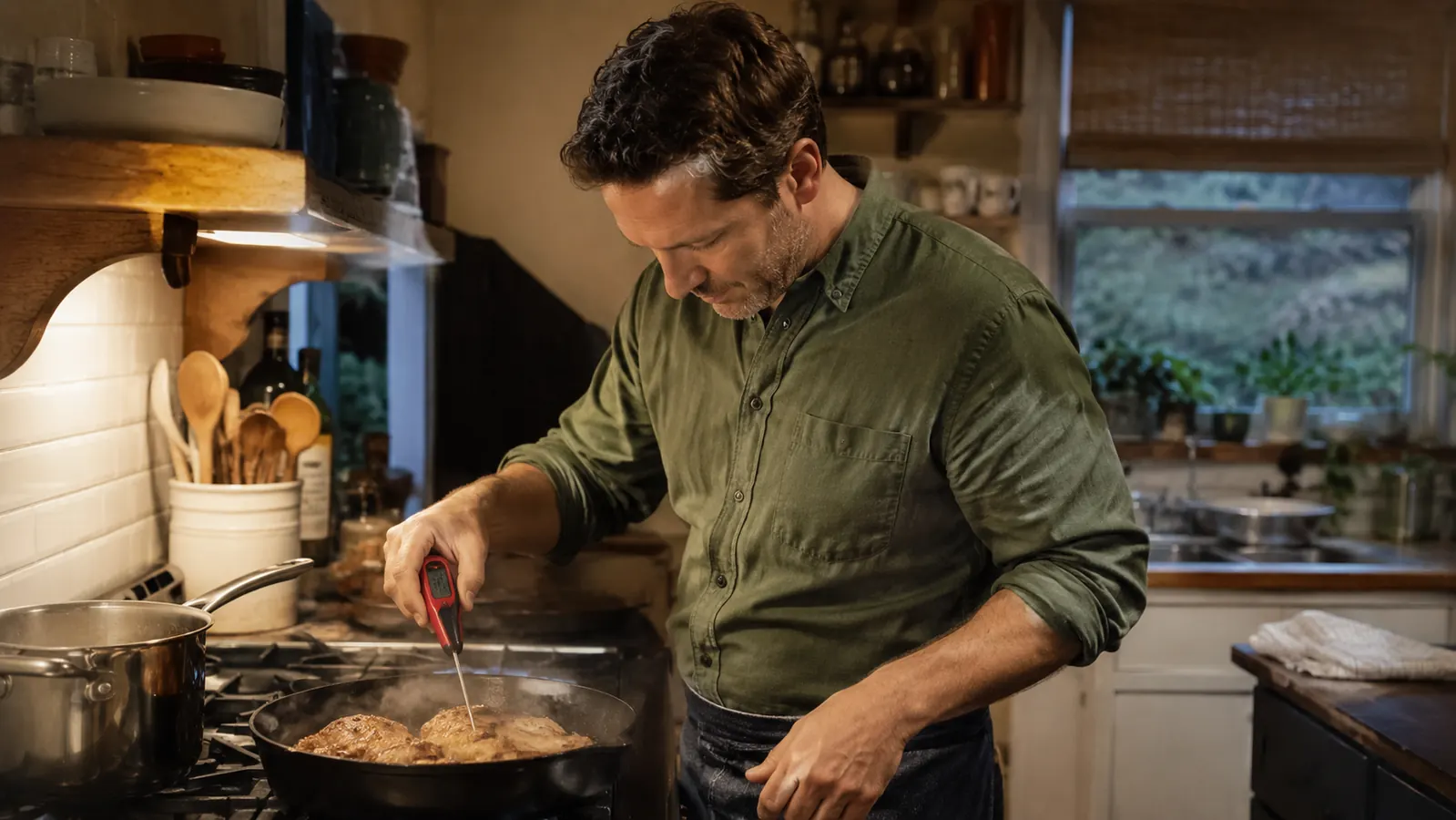
For longer than I want to admit, chicken breast was the dish nobody in my house got excited about. Not because they didn't like chicken, but because they never knew if that night's piece was going to be juicy or if it was going to sit there dry under a puddle of sauce we'd added mostly to disguise it. I was doing everything I thought I was supposed to do. Same recipe, same pan, roughly the same amount of time on the stove. Some nights it worked out fine. Most nights it didn't, and for years I never understood why. The answer, once I finally went looking for it, was a meat thermometer.
My method for checking doneness was the one I'd used since I first learned to cook: cut into the thickest part and look. If the juices ran clear and the middle wasn't pink anymore, I called it done. What that method never told me was how far past done I'd already gone by the time I got a clear read. By the time the center looked fully opaque with no hint of pink, the rest of that same piece had usually been cooking another several minutes past the point it needed to, and that stretch is exactly where chicken goes from tender to chalky.
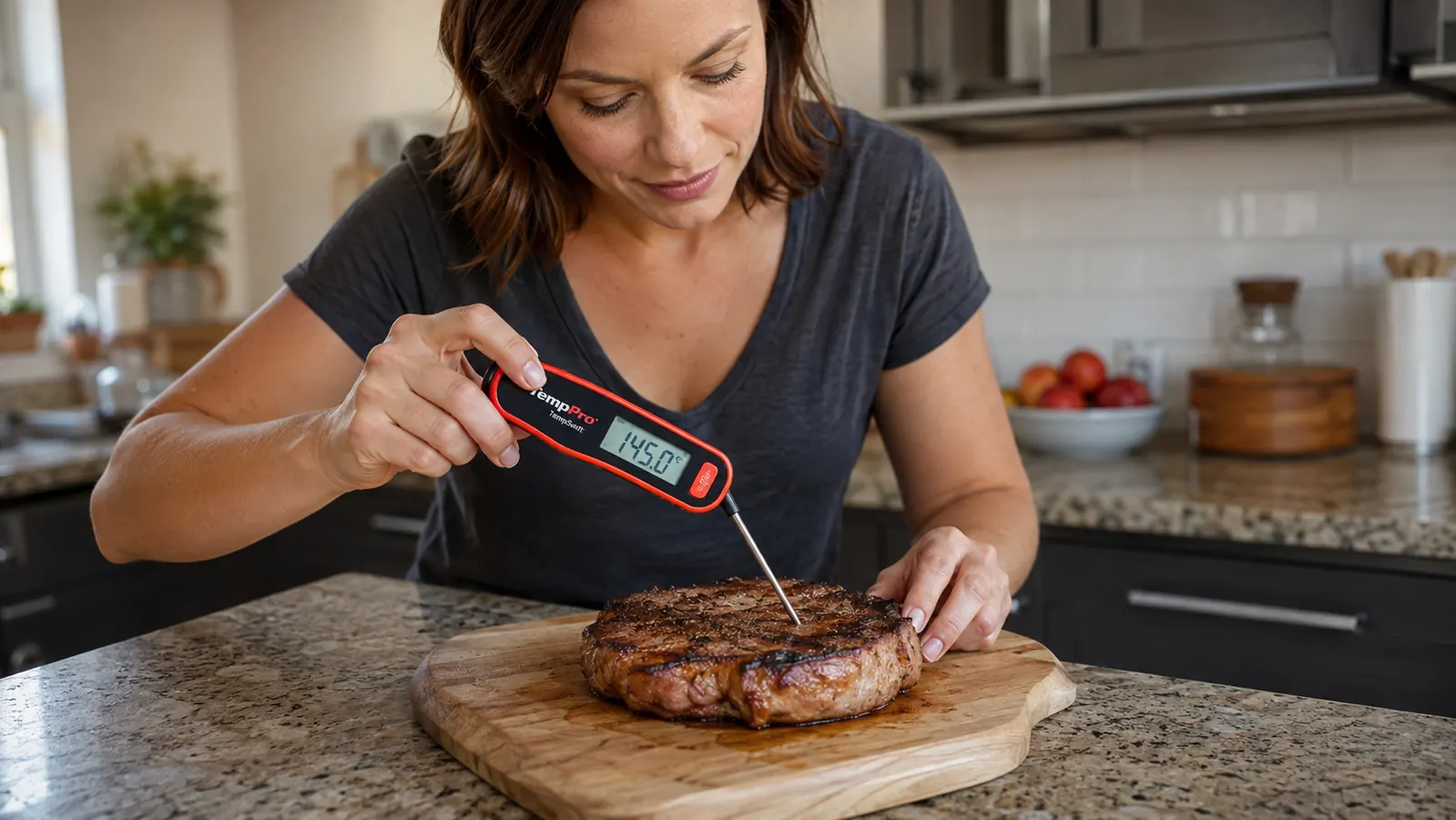
A neighbor mentioned in passing that she'd stopped guessing entirely and started using a TempPro TempSwift digital thermometer, the kind you stick in for a few seconds and it gives you an actual number instead of a guess. I'd seen instant-read thermometers before and assumed they were for people smoking whole briskets, not for someone just trying to get through a Tuesday night chicken dinner. I bought one mostly to settle my own curiosity, and the first thing it told me was something I genuinely didn't expect.
USDA guidance puts the safe minimum internal temperature for poultry at 165 degrees Fahrenheit. I had been cooking my chicken breasts well past that without realizing it, because "juices run clear" isn't a precise measurement, it's a guess dressed up as a rule. Once I started pulling the chicken at 165 degrees exactly and letting it rest a few minutes on the cutting board, the texture changed. It stayed moist instead of losing most of its liquid onto the plate. Nobody reached for the extra sauce that night.
I hadn't changed a single ingredient. I had just stopped cooking well past done without knowing it.
Guessing at doneness is how good chicken turns into dry chicken.
A quick read from the TempPro instant-read thermometer tells you the moment a piece hits a safe internal temperature, so you can pull it before it overcooks.
Amazon Check Today's Price on Amazon →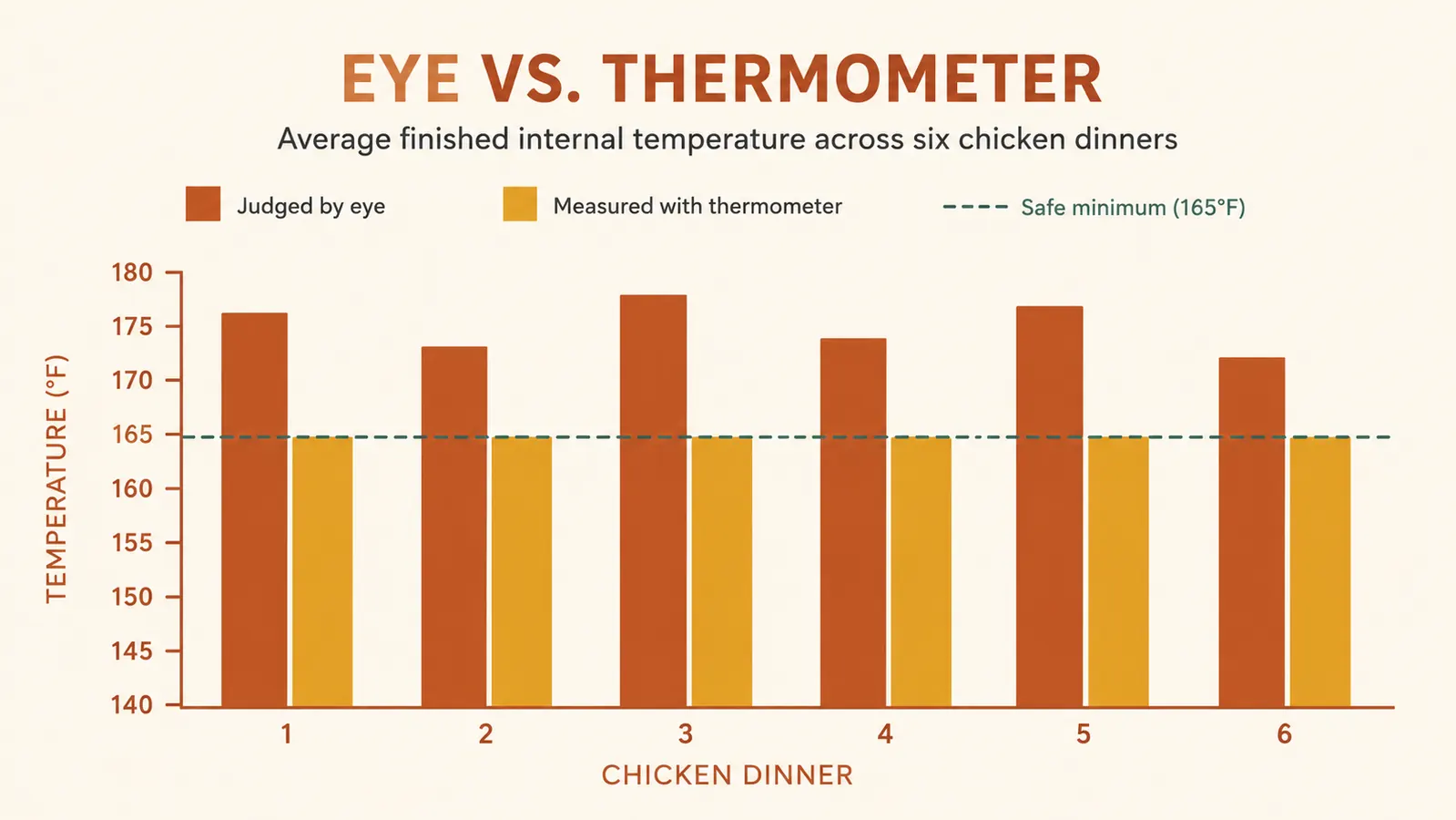
Pork chops were the next thing that changed. I grew up in a house where pork got cooked until it was pale all the way through, and old habits like that don't leave just because the guidance shifted years ago. Current USDA guidance for whole cuts of pork, along with beef, veal, and lamb, is 145 degrees Fahrenheit followed by a three minute rest. Checking with the TempPro thermometer instead of cutting into the chop and guessing meant I could pull it right at that number instead of the well-past-safe zone I'd been cooking to out of habit. The chops came out with actual moisture left in them, which sounds small until you've been eating dry pork chops for years and assumed that was just what pork chops were.
I wrote up more of the day-to-day details, how the backlight helps at the grill after dark and how it's held up under regular weeknight use, in the longer review I put together after a few months of using it, since one good dinner isn't proof of anything on its own. What convinced me it wasn't a fluke was cooking the same chicken and chops several weeks in a row and getting a consistent result every time, which had never once happened when I was going by look and feel alone.
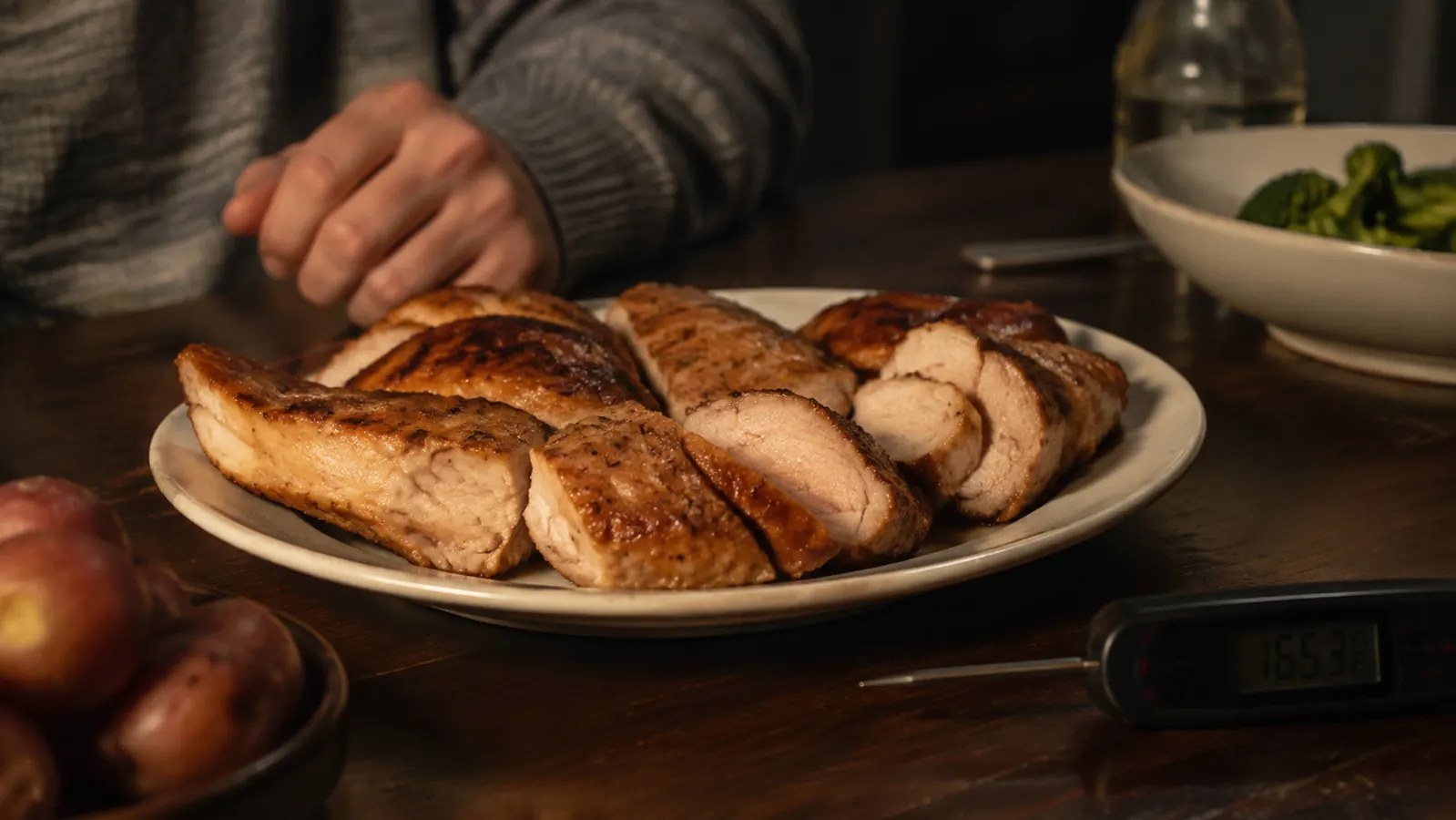
Steak is where I still lean on my own judgment along with the reading, since doneness there is more about personal preference than a single line, but I still check it against the USDA minimum for whole cuts before I call it done for guests. If you want the fuller case for why a thermometer changes more than just chicken, I laid out the rest of it in a separate piece on the specific ways a thermometer prevents overcooking across pretty much everything I cook on a stovetop or a grill.
None of this makes me a better cook than I was before. I'm not plating things with tweezers or trimming vegetables into shapes. What changed is that I stopped relying on how something looked or felt to tell me it was ready, because it turns out my eyes were wrong more often than I wanted to admit. The TempPro thermometer doesn't care what year I learned to cook pork or how my family always did chicken. It just gives me the number, and I decide what to do with it.
What I'd Tell You If We Were Sitting at My Kitchen Table
If you're still cutting into meat to check whether it's done, I get it, that's how most of us learned, and it's hard to trust a small piece of plastic and metal more than your own eyes. But your eyes are guessing, and mine were guessing wrong for years without me knowing it. A thermometer isn't going to make you a more skilled cook or replace good technique, and it won't tell you anything about flavor or seasoning. What it will do is tell you the one thing you can't actually see from the outside, which is what's happening in the middle of whatever you're cooking. That was the part I kept getting wrong, and it was the part making dinner dry.
Stop cutting into your chicken just to guess if it's done.
A TempPro instant-read thermometer gives you an actual number in seconds, so dinner comes off the heat exactly when it should, not five minutes late.
Amazon Check Today's Price on Amazon →