

Every glowing review of the TempPro TempSwift I read before I bought mine skipped straight to the good part: two or three seconds and it flashes a number. Nobody mentioned that the battery cap can strip if you twist it the wrong way, or that I ruined a chicken breast my first week because I stuck the probe in at an angle that gave me a reading from mostly air instead of meat. I've had mine in a kitchen drawer for going on a year now, pulled out for weeknight chicken, weekend grilling, and a couple of holiday roasts, and I think it earns the space. But I'm not going to hand you the highlight reel and call it a review.
This is the version I wish someone had written before I bought mine. The battery quirks, the probe placement mistake that actually matters, the display angle that trips people up at the grill, whether it survives a run through the dishwasher, and what happens to its accuracy after months of ordinary use. If you want the slower story of how it's held up week to week, I wrote that one separately in a longer look at using it through a full grilling season. This one leads with what nobody puts in the five-star reviews.
The Quick Verdict
A genuinely fast, accurate instant-read once you learn to place the probe correctly and keep a spare battery on hand, though it has real quirks nobody mentions upfront.
Amazon Check Today's Price →Before You Buy, Know What the Five-Star Reviews Skip
The TempPro reads a temperature in a few seconds once the probe is placed correctly. Here's what that actually takes in practice, plus today's price and availability on Amazon.
Amazon Check Today's Price on Amazon →How I've Used It
I'm not a professional cook, just someone who makes most meals from scratch in an ordinary-sized kitchen where drawer space is tight and every gadget has to prove it belongs. That means my testing hasn't been one dramatic roast under studio lighting. It's been weeknight chicken thighs and breasts, burgers and steaks on the grill most weekends from spring through fall, a couple of whole roasted chickens, a holiday turkey, and enough checks on frying oil and candy syrup that I've gotten fast with it.
None of that use was gentle. It's lived in a kitchen drawer next to a chef's knife and a stack of measuring cups, gotten dropped on tile more than once, and been handed off mid-cook to whoever else was at the stove. I wanted to know how it held up to the way a real kitchen actually treats a tool, not how it performs in a single careful demo.
Over roughly ten months of that kind of use, a few things became obvious that the marketing photos and the five-star reviews don't mention. None of them are dealbreakers on their own, but stacked together they're the difference between buying this expecting perfection and buying it knowing what you're actually getting.
The Battery Nobody Warns You About
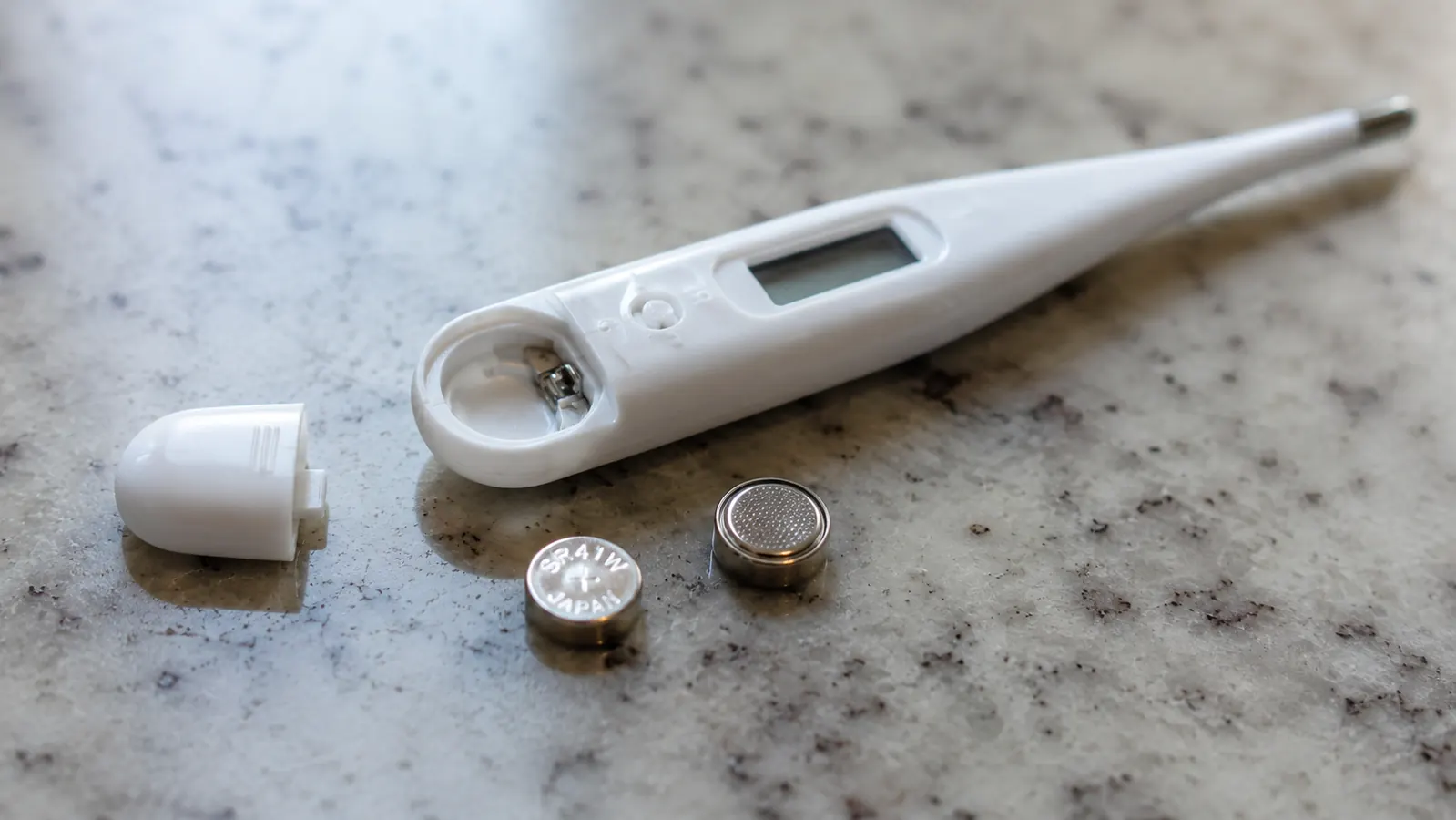
This runs on a small button-cell battery tucked under a twist-off cap on the back of the unit, and that cap is the first thing nobody mentions. It's a small plastic thread, and if you cross it while screwing the cap back on after a battery swap, it can strip enough that the cap stops seating flush. Mine still works fine, but I've learned to line it up carefully and turn it slowly instead of forcing it, which is not something the box tells you.
The bigger issue is that the battery doesn't give much warning before it dies. There's no gradual dimming or a low-battery icon that shows up days ahead of time in my experience. Mine has gone from a normal, bright display to nothing between one use and the next, twice now, both times right when I needed it mid-cook. I keep a spare battery in the same drawer now specifically because of this, and I'd genuinely tell anyone buying one to do the same before they need it for a holiday roast and find out the hard way.
It's a small thing, and swapping the battery takes under a minute once you have a spare on hand. But it's exactly the kind of detail that never shows up in a review written after someone's first good session with it, and it's the first thing I'd want to know if I were buying one today.
Probe Placement Is Where Most People Get It Wrong
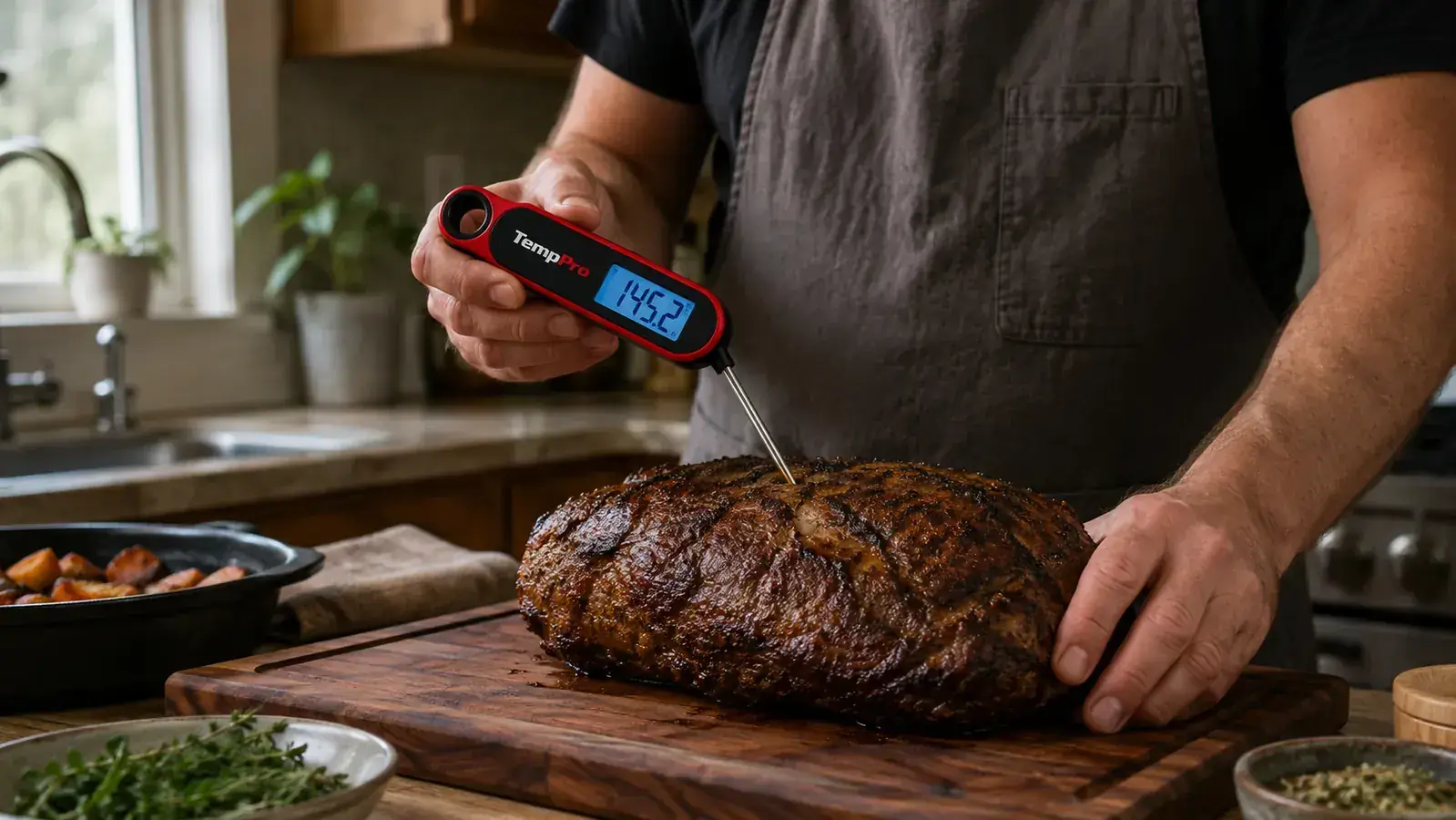
The single biggest mistake I made early on, and the one I see other people make too, is not thinking about what the probe is actually touching once it's inside the meat. A fast, accurate reading only means something if the tip is sitting in the center of the thickest part, away from bone, away from fat pockets, and not poking out the other side into open air. I ruined a chicken breast my first week doing exactly that, angling the probe too shallow and getting a reading that was mostly measuring the pan underneath it, not the meat.
On a whole chicken or a roast, the mistake shifts. It's easy to hit bone without realizing it, especially near a thigh joint, and bone reads hotter or cooler than the surrounding meat depending on where you catch it, which throws the number off without any indication that anything went wrong. I've learned to angle the probe in from the side, toward the center mass, and pull it back out a fraction if I feel resistance that could be bone rather than muscle.
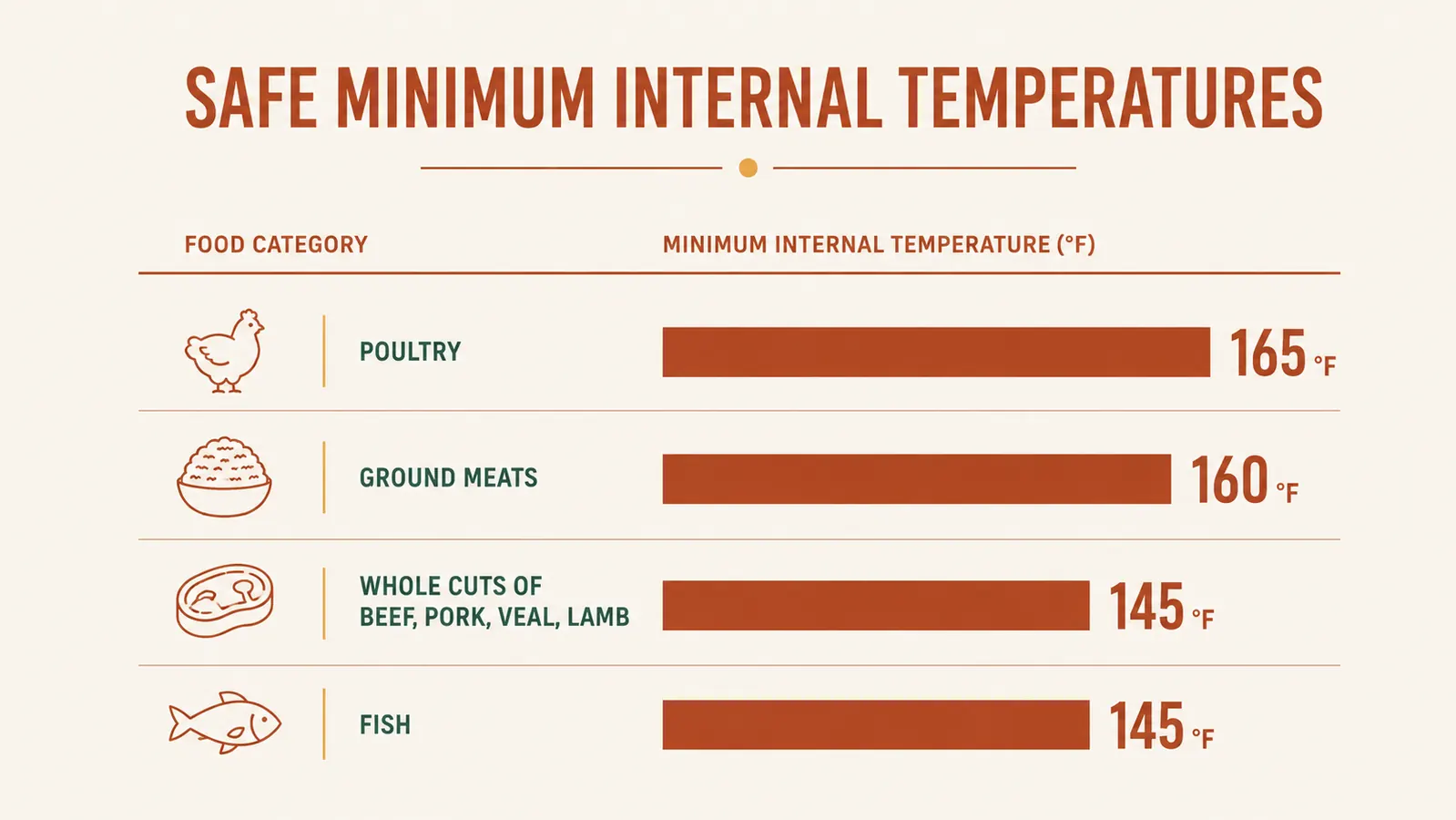
For what it's worth, once the probe is actually placed correctly, the reading itself has been consistent and fast in my experience, generally a few seconds to settle. According to USDA guidance, poultry should reach a safe minimum internal temperature of 165°F, ground meats 160°F, whole cuts of beef, pork, veal, and lamb 145°F followed by a three minute rest, and fish 145°F. This TempPro thermometer reads to those numbers reliably. It just can't tell you whether the tip is actually where it needs to be, that part is still on the cook.
The Display Angle That Trips People Up
The screen sits at a fixed angle relative to the handle, and depending on how you're holding it and where you've inserted the probe, that angle isn't always facing you when you need it most. On a grill, reaching across to check a burger or a chicken thigh often means the display ends up angled away or downward, and I've caught myself tilting my whole wrist just to read the number rather than the meat dictating a natural angle.
The backlight genuinely helps here, especially cooking after dark or checking something in a dim oven, and it's one of the features I use more than I expected to. But it doesn't fix the underlying issue, which is that the display's fixed position sometimes fights against the angle the probe actually needs to go in at. It's a minor annoyance most of the time, and a real one on a crowded grill with your hands full of tongs and a plate.
Dishwasher: Don't Even Think About It
This is not dishwasher safe, and I want to say that plainly because the packaging's wipe-clean language is easy to gloss over when you're rushing through cleanup after dinner. It's an electronic unit with a digital display and an internal battery compartment, and running it through a dishwasher cycle risks water getting into places it has no business being.
I wipe mine down with a damp cloth and a little dish soap after every use, and for the probe itself I run it briefly under warm water and dry it right away rather than letting it sit wet. It's an extra thirty seconds compared to just tossing it in the dishwasher with everything else, but it's the difference between a TempPro thermometer that still works in a year and one that doesn't.
Does Accuracy Drift Over Time?
I tested mine against an ice water bath, a standard home check where a properly calibrated instant-read should land close to 32°F in a slurry of ice and water, both when it was new and again after several months of regular use. The reading held close to that mark both times in my case, which was reassuring, but I've also read enough other owners' experiences to know that drift isn't unheard of with instant-read thermometers in this price range generally, especially after being dropped or knocked around in a drawer.
My takeaway is to check it against an ice bath every few months rather than assuming it's still dead-on forever, particularly if it's taken any hard drops. It takes two minutes, it costs nothing, and it's cheap insurance against serving an undercooked chicken thigh because a unit that used to be accurate quietly drifted a few degrees without any way of telling you.
What It Still Gets Right
None of this is meant to talk you out of it, and I don't want the drawbacks above to read like a case against buying it. Once the probe is placed correctly, the speed is real, a few seconds and it settles on a number, which is a genuine upgrade from the pop-up timers and guesswork I used for years before this. It's also the reason I stopped cutting into chicken to check if it was done, which used to mean drier meat and a counter full of juice every single time.
Compared to the pop-up timer that came built into most of the turkeys and chickens I used to buy, this reads faster, works on cuts that don't have a pop-up timer at all, and doesn't leave me guessing whether the little plastic stem actually popped at the right moment. I compared the two more directly in this side-by-side look at instant-read versus pop-up timers, if you're weighing whether you need a separate thermometer at all.
For the price of a couple of coffees, it's replaced cutting into meat to check doneness, guessing based on cook time alone, and the built-in pop-up timers I never fully trusted. The quirks above are real, and I'd rather you know them going in than discover them mid-cook on a holiday like I did. But after ten months of regular use, it's still the tool I reach for first.
What I Liked
- Reads a temperature in a few seconds once the probe is placed correctly
- More reliable than a pop-up timer, and works on cuts that don't have one
- Backlight genuinely helps in low light or after dark
- Held steady in an ice water check after months of regular use
- Compact enough to live in a crowded drawer
Where It Falls Short
- Battery cap can strip if you cross the thread screwing it back on
- Little to no warning before the battery dies mid-cook
- Not dishwasher safe, needs a hand wipe-down every time
- Display angle can fight the angle the probe needs to go in at, especially on a grill
- Worth checking against an ice bath periodically rather than assuming it stays accurate forever
The five-star reviews sell you the reading. Nobody tells you what happens if the probe is in the wrong spot, or the battery dies at the worst possible moment.
Who This Is For
This makes the most sense for anyone who cooks meat regularly enough that guessing doneness by cook time or a single cut into the middle has stopped feeling acceptable. If you grill most weekends, roast a chicken more than occasionally, or fry at home and need to know when oil has actually come up to temperature, this earns its drawer space once you've learned the two or three habits above that the packaging doesn't teach you.
It's also a solid fit if you're tired of dry chicken breast or an undercooked roast on a night that mattered, since a correctly placed probe reading removes most of that guesswork. The learning curve here is short, mostly about where to put the probe, and once it clicks it stays clicked.
Who Should Skip It
If you're looking for something that needs zero attention to use correctly, a leave-in probe thermometer with an alarm might suit you better, since this requires you to actively check temperature at intervals rather than monitoring it continuously from across the kitchen. The same goes if you know you won't remember to keep a spare battery on hand, since a dead battery mid-cook with no backup is the single most frustrating way this can let you down.
It's also probably not the right buy if you're expecting a tool that's forgiving of careless probe placement or rough handling. Getting an accurate reading still depends on you finding the center of the thickest part and avoiding bone, and the battery cap needs a careful hand when you're swapping it. If that sounds like more attention than you want to give a kitchen gadget, the frustration will likely outweigh the benefit for you.
Know the Quirks, Still Earns the Drawer Space
It's not flawless straight out of the package, but once you know where to place the probe and keep a spare battery nearby, it's replaced guesswork for good in my kitchen. See today's price and current availability on Amazon.
Amazon Check Today's Price on Amazon →