
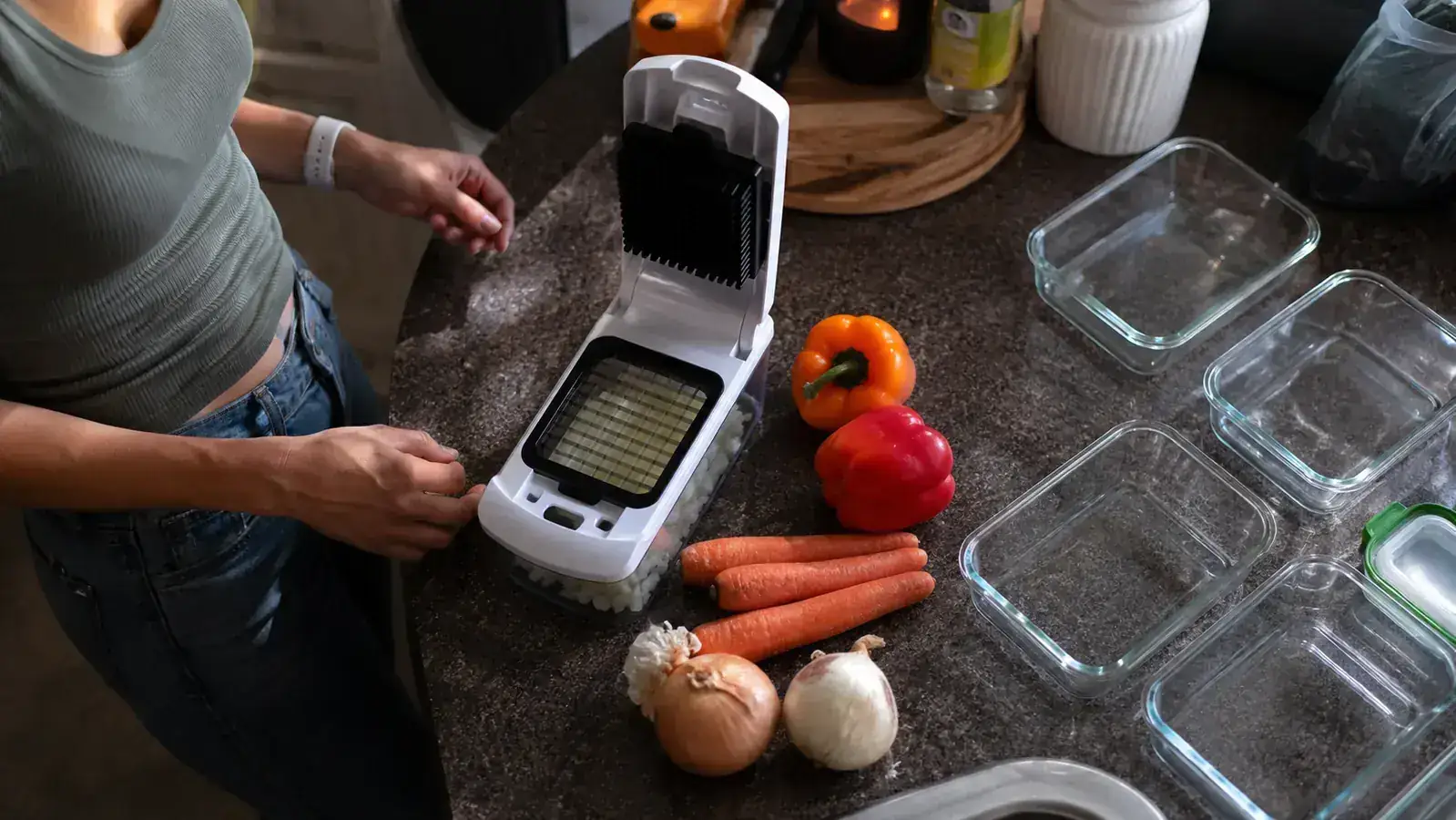
Sunday afternoon used to eat itself. By the time I'd washed, peeled, and diced enough onions, bell peppers, carrots, and cucumbers for a week of dinners, lunches, and my kids' snack containers, I'd lost close to an hour and my kitchen counter looked like a produce stand had exploded on it. That changed the week I started actually using my Fullstar vegetable chopper the way it's meant to be used, instead of pulling it out only for the occasional salad. Dicing a full onion went from about ten minutes of watery eyes and a wobbly knife grip to under a minute, no tears, no rocking a blade through a slippery half-onion while it slides around the board.
None of what follows requires this specific chopper. A sharp knife and a box grater will get you through every step here, just slower and with more cleanup. But if you're the kind of home cook who skips meal prep some weeks purely because of the chopping, a tool like the Fullstar is the piece of equipment that tends to make the difference between prepping and not prepping at all. Here's the system I actually use, start to finish, every week.
I'm not a professional cook and I don't run a restaurant kitchen, I'm just someone who makes most of her family's meals from scratch in a regular-sized kitchen with more cabinets than counter space. Everything below is built around that reality: one small chopper, a handful of containers, and a Sunday window that has to fit around everything else on the calendar, not a separate prep day with nothing else going on.
Stop letting the cutting board decide whether you meal prep this week
A dull knife and a pile of onions is the reason most people quit meal prep by February. This is the chopper that got me back to doing it every Sunday.
Amazon Check Today's Price on Amazon →Step 1: Plan your week backward from one prep session
Before anything gets cut, I write out what I'm actually cooking Monday through Friday, five meals max, and list every vegetable each one needs. Then I group by shape rather than by recipe. Onions for three different dinners get diced in one pass, not three separate ones on three different nights. This sounds obvious but it's the step most people skip, and it's the reason a chopper actually saves time instead of just being a slightly faster way to do the same scattered chopping across five separate evenings.
I keep the list to what I'll realistically use within four days. Diced vegetables lose texture and start to weep liquid in the container past that window, especially cucumber and tomato, so overprepping just means more waste later, not more time saved now.
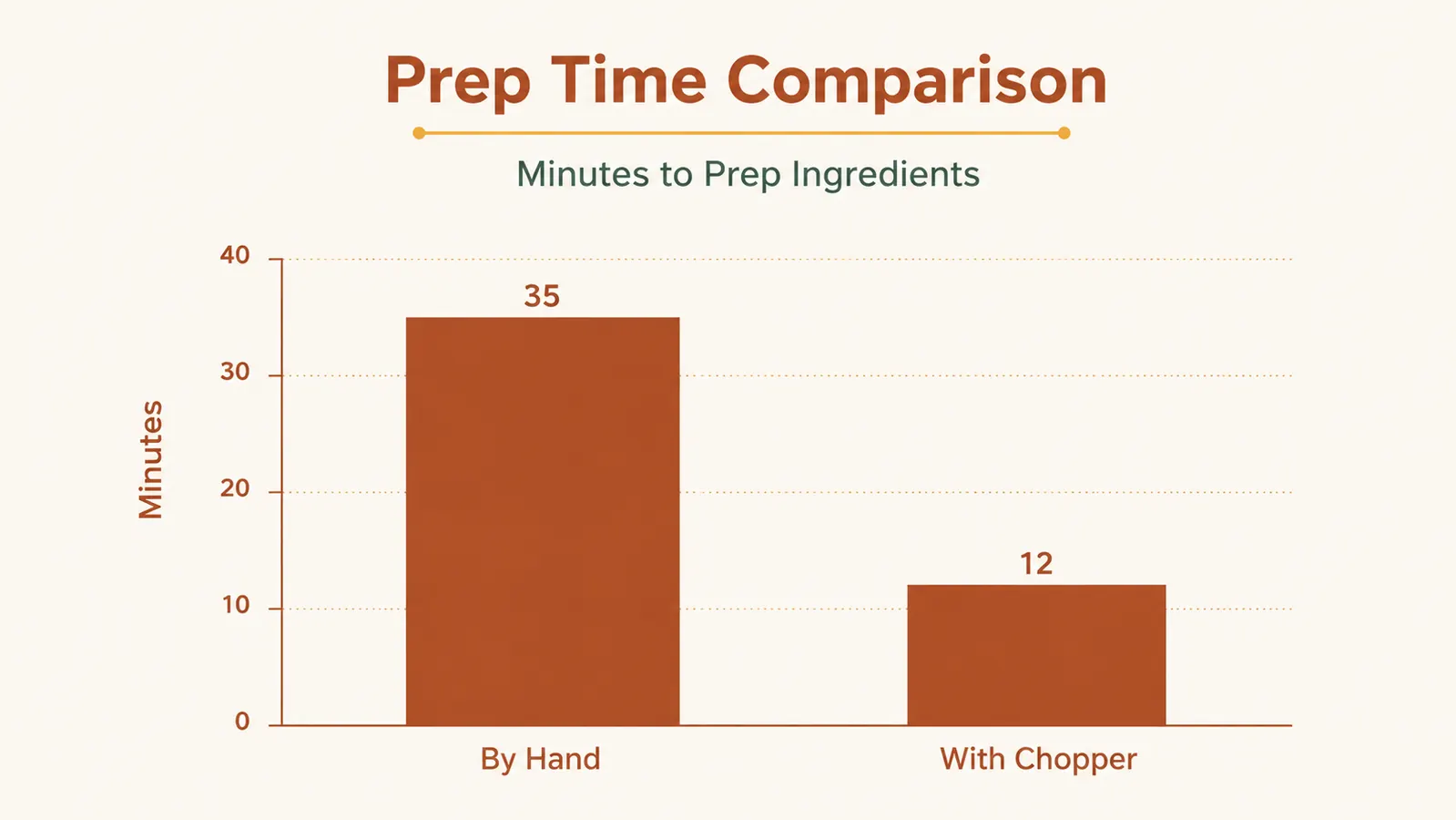
I also write the list on an index card and tape it to the inside of the cabinet where the containers live. It sounds small, but it means I'm not standing at the counter mid-chop trying to remember whether Wednesday's dinner needed diced or sliced peppers. Deciding that ahead of time, on paper, is what actually keeps the chopping part of the session under twenty minutes.
Step 2: Set up your stations before you cut anything
I pull out every container I'll need and line them up on the counter before I touch a vegetable. This is the part people underestimate. Stopping mid-chop to dig a lid out of a cabinet is where a fast prep session turns into a forty-minute one. With the Fullstar chopper's own catch container doing the dirty work, diced onion or pepper drops straight into it instead of scattering across the board, so I'm not chasing stray pieces around the counter between vegetables either.
I also fill a small bowl with water and set it by the sink for a quick rinse of the blade insert between vegetables that have strong flavors, garlic and onion especially. That thirty-second rinse saves me from tasting onion in my diced strawberries later.
One more habit that saves real time, I peel everything that needs peeling in one batch before the Fullstar chopper comes out at all. Switching back and forth between a peeler and the chopper breaks the rhythm and means wiping the counter down twice instead of once. Peel first, chop second, wipe last.
Step 3: Match the blade insert to what you're actually cutting
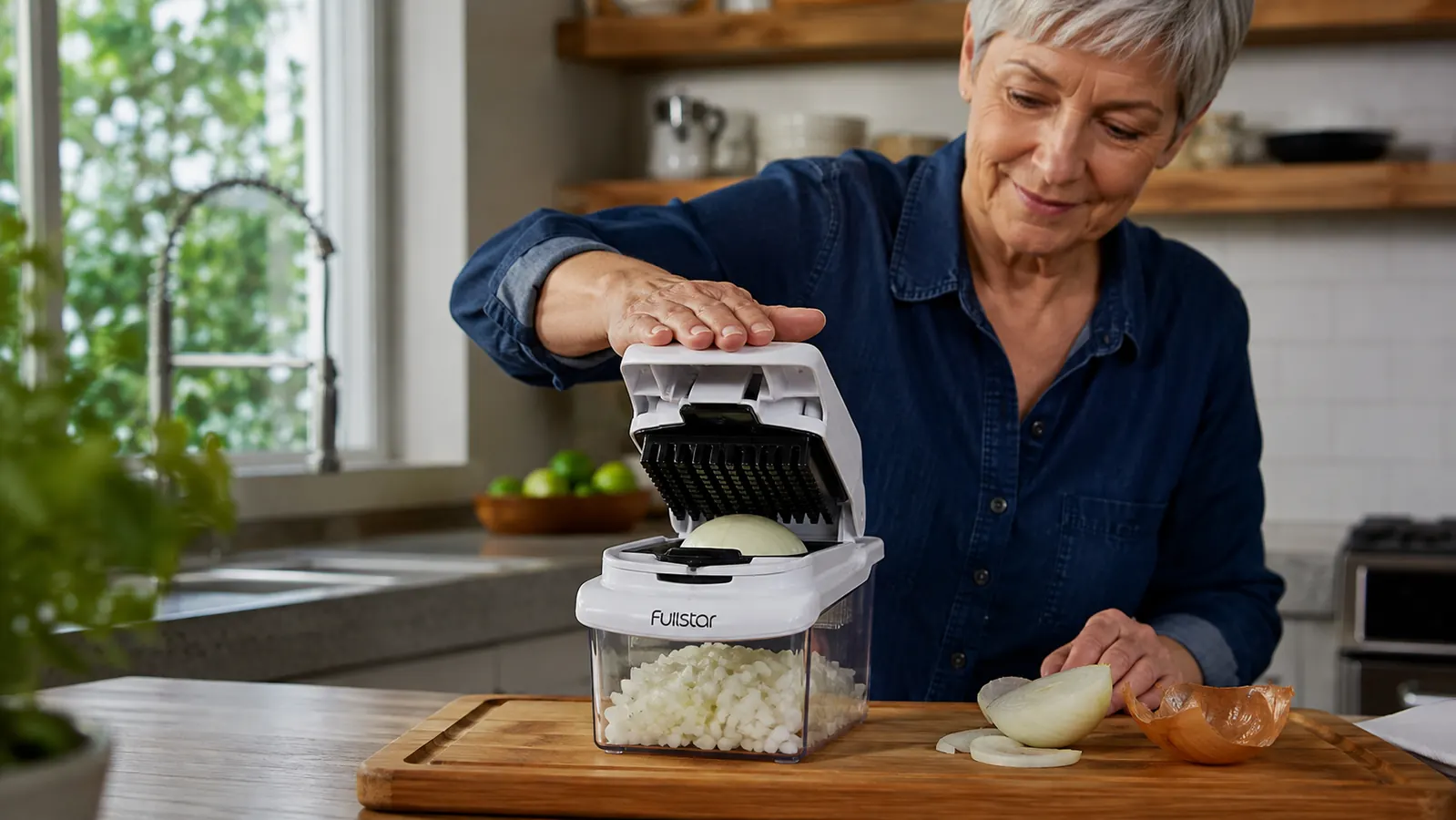
This is where technique matters more than the tool. A chopper like the Fullstar comes with more than one blade insert, and the size you pick changes the cut, not just the speed. I use the larger dice for onions, bell peppers, and potatoes that are going into a skillet or a roasting pan, and the finer dice for anything going raw into a salad or a bowl where texture matters more. Press straight down through the handle with your palm, don't rock it side to side like a knife. Rocking is how the blades bind up on dense vegetables like carrots and how you end up applying more force than the tool is designed for.
I'll be honest about where it struggles. Very soft, watery produce like ripe tomatoes or overripe avocado tends to smash rather than cut cleanly, and thin leafy greens don't work at all, that's still a knife or kitchen shears job. For firm vegetables, cucumbers, onions, bell peppers, zucchini, potatoes, apples, it handles the bulk of a weekly prep list without much trouble.
For a hard vegetable like a whole potato or a large sweet potato, I'll do a rough cut with a knife first, into quarters, so the chopper has less resistance to push through. Skipping that step is how you end up leaning your full body weight onto the handle, which is more force than the blades need and more than is comfortable to apply safely.
Step 4: Chop in an order that saves you washing steps
I go mild to strong and dry to wet: bell peppers and carrots first, cucumbers and zucchini next, onions and garlic last. That order means fewer full rinses of the blade insert during the session, since you're not going from garlic back to something delicate that would pick up the smell. It also means the cutting board and counter stay drier longer, which matters more than it sounds like it should when you're trying to move fast without everything getting slippery.
If I'm prepping for a full week ahead, like the technique I lay out in my long-term notes on using this chopper daily, I'll do a double batch of onions specifically, since almost every dinner that week starts with a diced onion in a hot pan. Fruit, when I'm prepping it for the kids' lunches, always comes dead last, after every savory vegetable, so nothing carries an onion smell into the apple container.
Step 5: Clean the blades safely and store what you prepped
The blades inside these inserts are real stainless steel and genuinely sharp, sharp enough to nick a finger if you handle them carelessly. I never reach into the container to pull out stuck vegetable pieces with my fingers. I use the small cleaning brush that comes with mine, or run the insert under water and let the water do the work while I hold it by the plastic frame, not the blade edge. When I dry it, I set it blade-down on a towel rather than leaving it loose in a drawer where a hand could land on it reaching for something else.
On dishwasher safety, treat it as a general caution rather than an assumption either way. Plastic bodies and lids on chopper-style tools are often dishwasher safe, but the sharp blade inserts frequently are not, since high heat and jostling in a rack can dull or warp them over time. Check the care instructions that come with whatever chopper you own and hand-wash the blade pieces if there's any doubt. It takes twenty seconds and it's the difference between the blades staying sharp for years and needing a replacement insert after a few months.
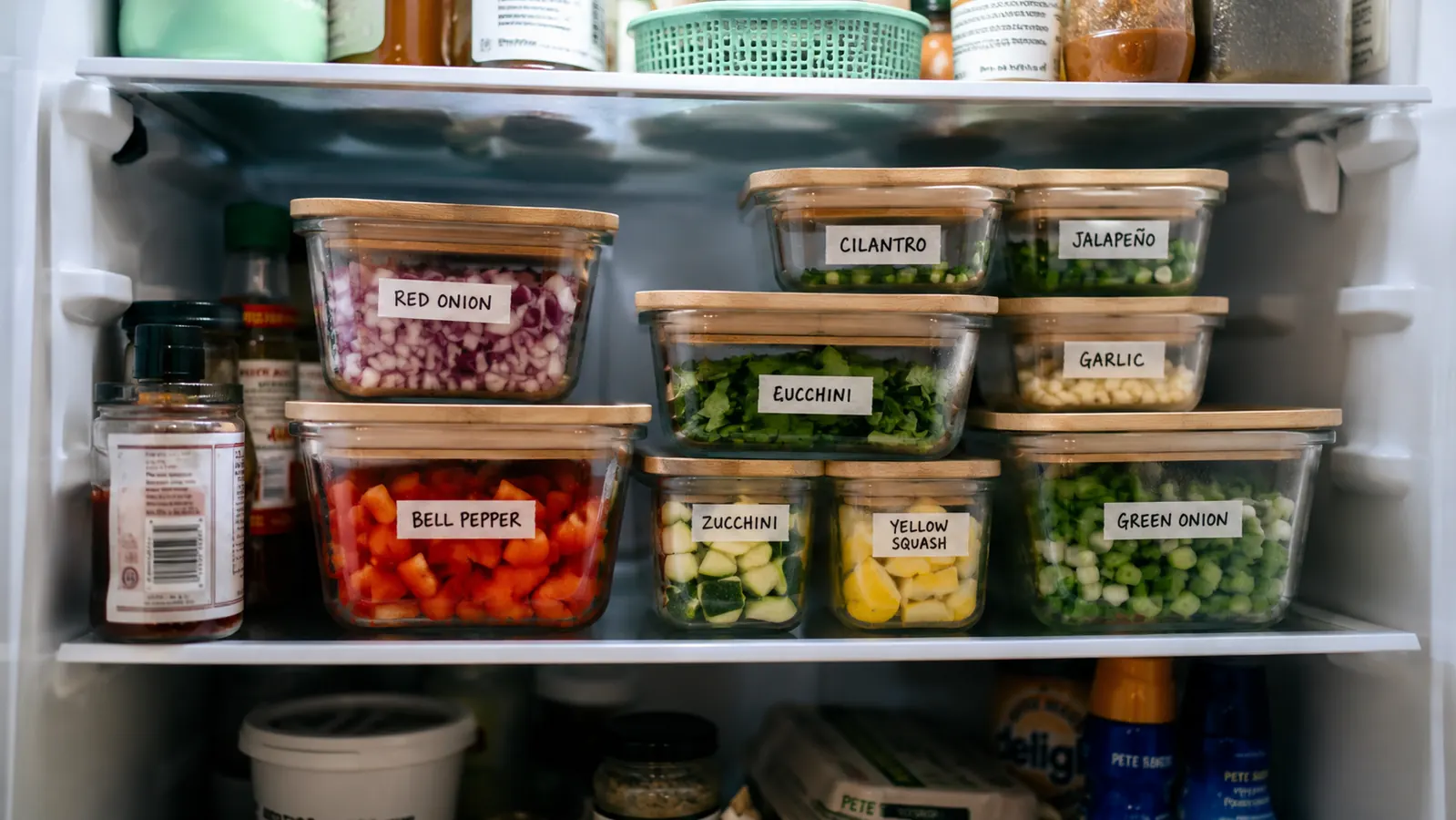
Once everything is diced, I split it into the containers I set up in Step 2, label them by day if I'm feeling organized that week, and get them into the fridge within thirty minutes of cutting. That window matters more for anything with cut surfaces exposed to air, like potatoes and apples, which brown fast.
Kids in the house changes this math a little. I keep one small container of plain, unseasoned diced vegetables, usually cucumber and bell pepper, set aside before anything gets seasoned or added to a recipe, so there's always a ready snack option that didn't need a separate cutting session. It takes an extra minute during Step 4 and saves an entire round of chopping later in the week.
How Long Prepped Vegetables Actually Keep
This is the part that determines whether prepping ahead saves you money or just delays the trash can. In my kitchen, firm vegetables like carrots, bell peppers, and onions hold up well in a sealed container for four to five days. Cucumber and zucchini start to soften and release water by day three, so I only prep those in amounts I'll use within that window. Anything diced from a potato or apple gets a splash of water or lemon juice in the container to slow browning, and even then I plan to use it within two days.
If a container smells off, looks slimy, or has visible liquid pooling at the bottom, I toss it rather than risk it. That's not specific to using a chopper, it's just basic food safety for anything cut and stored ahead of time, but it's worth saying because the whole point of this system is eating better during the week, not gambling on questionable leftovers to save fifteen minutes on a Tuesday.
What Else Helps
A chopper handles dicing and rough cubes well, but it's not the right tool for every cut. When I need paper-thin cucumber for a quick pickle or uniform potato slices for a gratin, I reach for a mandoline instead. I put the two side by side in this comparison of what each one is actually good at, since they solve different problems and a lot of people buy the wrong one first. A sharp paring knife still earns its drawer space too, for anything small or oddly shaped that won't sit flat under the chopper's blade, garlic cloves and celery stalks especially. And a set of stackable, freezer-safe containers matters almost as much as the chopper itself, since a fast chop with nowhere organized to put the results just moves the mess from the cutting board to the fridge shelf.
The biggest time savings didn't come from cutting faster. It came from not dreading the cutting board enough to skip prep entirely.
Twenty minutes of prep, five nights of not thinking about dinner
That's the actual trade this system makes. The chopper isn't magic, it just removes the one step that used to make me put the whole plan off until it was too late to start.
Amazon Check Today's Price on Amazon →