
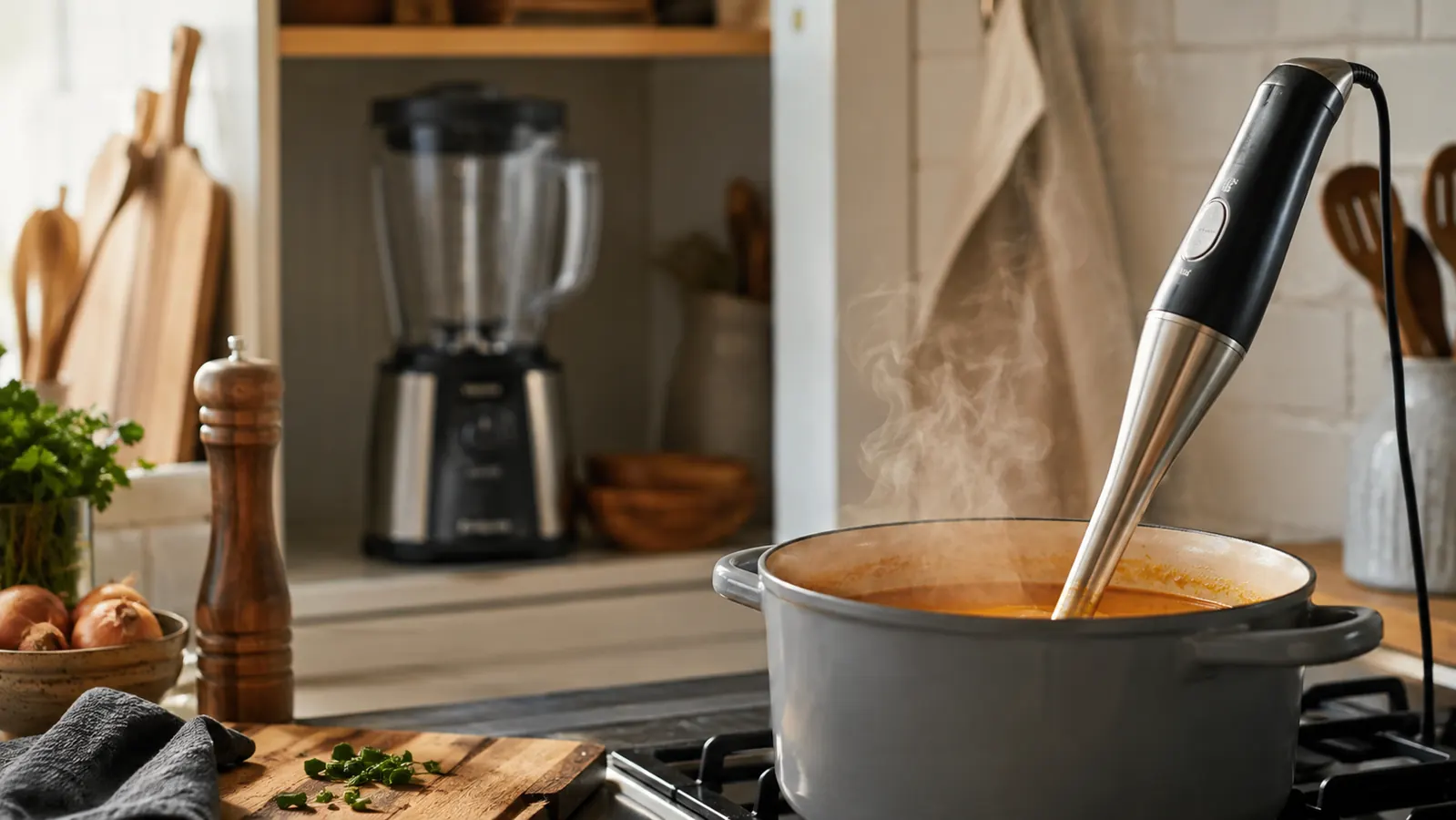
I did not plan on getting rid of my countertop blender. It was a hand-me-down that took up a third of one counter, and for years I assumed a real kitchen just includes one. Then I started making soup from scratch most weeks, hauling hot broth over to the blender in batches, wiping splatter off the cabinets, and washing a pitcher for a job that should have taken two minutes. That's what pushed me to try the Cuisinart Smart Stick immersion blender instead, and it's also why I still keep a full-size countertop blender in the cabinet for the handful of things it genuinely does better.
Short answer: if most of your blending is soup, sauce, dressing, or a single-serving smoothie, the immersion blender wins on convenience and cleanup by a wide margin. If you regularly crush ice for drinks, make frozen daiquiris, or blend large silky-smooth batches for a crowd, a countertop blender like a Ninja Professional still earns its counter space. Below is where each one actually pulls ahead, task by task, not just marketing claims.
I ran this comparison the boring, honest way, by not putting either one away. For a few months, both machines had a home in my kitchen at the same time, and I let whichever recipe was in front of me decide which one I reached for instead of forcing a winner. What follows is what actually happened over that stretch, not a guess based on spec sheets.
| Cuisinart Immersion Blender | Countertop Blender | |
|---|---|---|
| Blending soup right in the pot | Dip the wand straight into a hot stockpot, no transferring | Ladle hot soup into a pitcher in batches, in stages |
| Kitchen storage footprint | Stores upright in a drawer or on a hook, about the size of a rolling pin | Permanent counter appliance, base plus a tall pitcher |
| Cleanup after use | Rinse the blending wand under the tap, nothing else to wash | Pitcher, blade assembly, and lid all need washing separately |
| A single-serving smoothie or shake | Blend right in a tall cup with the two-speed motor, minimal mess | A full-size pitcher and blade base is a lot of machine for one serving |
| Crushing ice for drinks | Struggles, the blades stall and the motor bogs down on cubes | Built for it, pulverizes a full tray of ice in seconds |
| Very smooth, high-volume purees | Can leave small unblended bits in a big batch if you rush the wand around the pot | Vortex action pulls a large batch down evenly for a silkier result in one pass |
| Hands-free operation | You hold and move it through the entire blend | Push a button and walk away while it runs |
| Frozen drinks and fruit smoothies with ice | Not built for it, will strain the motor over time | Handles frozen fruit and ice without complaint |
| Learning curve for a first-time user | Point it down, pulse, done in under a minute | Just as simple once you learn the lid, pulse, and speed settings |
Where the Cuisinart Immersion Blender Wins
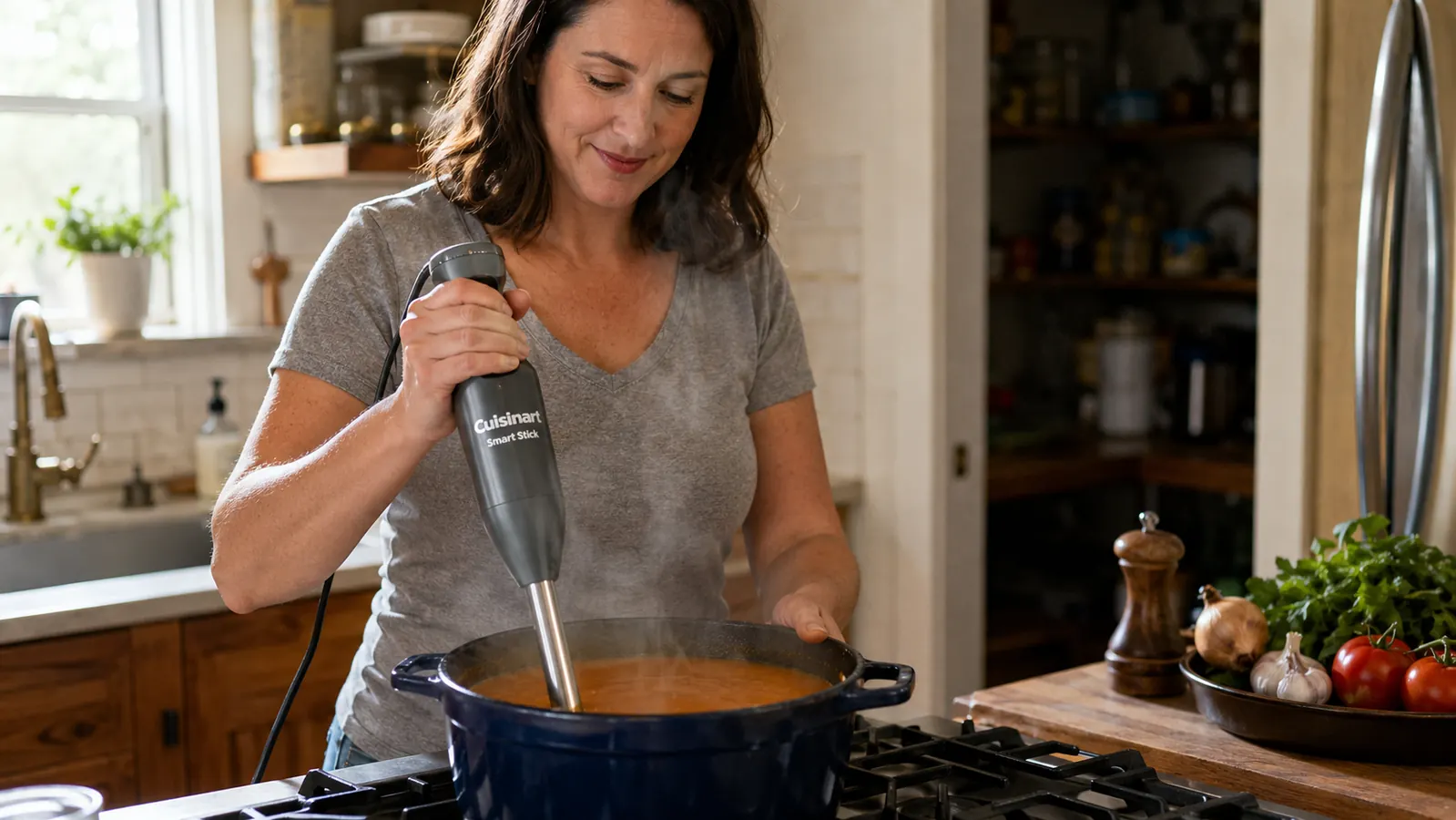
The single biggest reason I reach for the immersion blender is soup. Once a week, sometimes twice in the fall, I make a pot of something like butternut squash or roasted tomato soup, and the old routine of ladling several cups of near-boiling liquid into a blender pitcher, blending in batches, and pouring it back was the part of cooking I dreaded most. A splash of hot soup on my hand years ago was enough to make me careful about it for good. With the Cuisinart, I turn off the burner, tilt the pot slightly, and run the wand through it right there on the stove. No transferring, no waiting for it to cool enough to pour, no second pot to catch the blended batches. It takes under two minutes for a full pot, and I've written up the exact technique I use for getting it consistently smooth in this soup guide.
The second reason is space. My kitchen has one drawer near the stove for tools that get daily use, and the Cuisinart lives there standing up, wand down, next to the spatulas. A countertop blender needs a base, a pitcher, and enough clearance to lift the lid, and mine used to sit on the counter permanently because there was nowhere else it fit. Cleanup follows the same logic. After blending, I run the wand under warm water for about fifteen seconds and it's done. There's no pitcher, no rubber gasket, and no blade assembly to pull apart and scrub.
It also covers more small jobs than I expected going in. The two-speed motor means I can blend a single smoothie or shake right in a tall cup for one person instead of hauling out a full pitcher for a half-full blend, and I've used it for pureeing baby food during a week my sister's kids were staying with us. None of those jobs justify pulling out a countertop blender, but they come up often enough that having a fast, small tool for them actually matters.
There's also less to think about with a 300-watt motor doing lighter, controlled jobs instead of grinding through frozen or fibrous ingredients day after day. I've had mine in regular rotation for months now with no slowdown, no strange noises, and no motor smell, which is more than I can say for a couple of cheap countertop blenders I went through before this one.
Where the Countertop Blender Wins
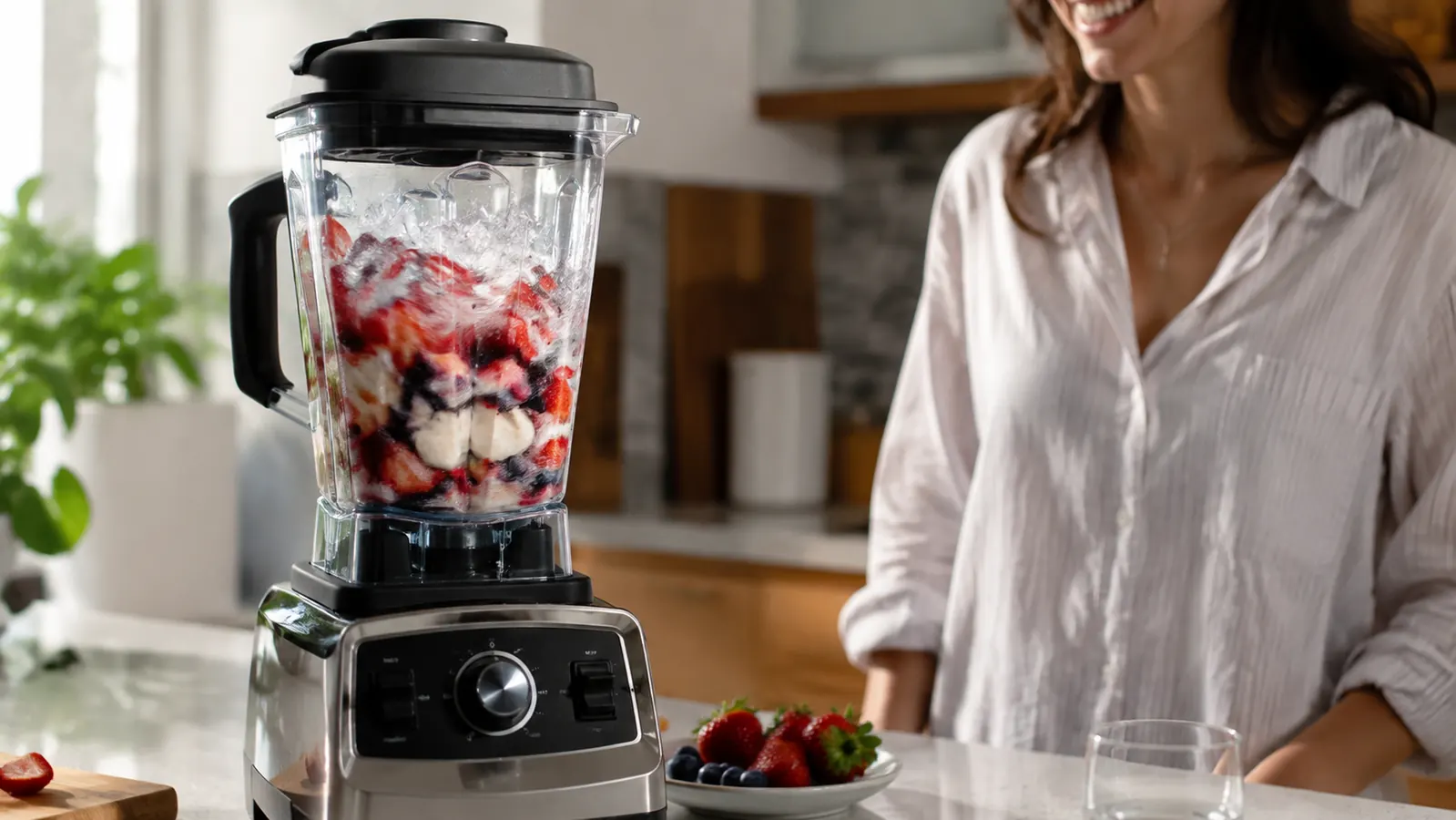
I will not pretend the immersion blender replaces a real countertop blender, because it doesn't try to. Ice is where the difference is most obvious. I tried crushing ice for iced coffee with the Cuisinart exactly twice before I stopped. The blades stall against solid cubes, the motor whines under the load, and you end up moving the wand around chasing chunks instead of actually blending them. A countertop blender built for it, something like a Ninja Professional with a real base motor, goes through a full tray of ice in under thirty seconds without hesitation. If frozen margaritas, daiquiris, or iced coffee drinks are a regular thing in your house, that's not a fair fight and the countertop blender takes it easily.
Volume and hands-free operation are the other two. When I'm making a big batch of soup or a smoothie base for the whole week, a countertop blender's vortex pulls everything down into the blades on its own, so a large batch comes out evenly silky in one pass. With the immersion blender, a big stockpot batch can leave a few unblended bits near the edges if I'm not patient about working the wand around the whole pot. A countertop blender also lets you push a button and walk away, which matters if you're also trying to get vegetables roasting or set the table at the same time.
There's a real ceiling on what an immersion blender's motor can handle. Thick nut butters, large-batch frozen desserts, and anything that needs sustained crushing power will wear on a hand blender's motor over time in a way a dedicated countertop machine is built to shrug off. I still keep mine in the cabinet for exactly those jobs, even though it comes out maybe once a month now instead of every other day.
If you host often, a countertop blender is also just a better party trick. Setting a pitcher of blended frozen drinks in the middle of the table beats handing people a wand and a stockpot, and nobody wants to watch you hover over a hot pot with a hand blender while they're standing around waiting for a drink.
Stop Hauling Hot Soup to the Blender
If most of your blending happens over a pot on the stove, the Cuisinart Smart Stick lets you skip the transferring, the splatter, and the second pitcher to wash. See today's price and current availability on Amazon.
Amazon See Today's Price on Amazon →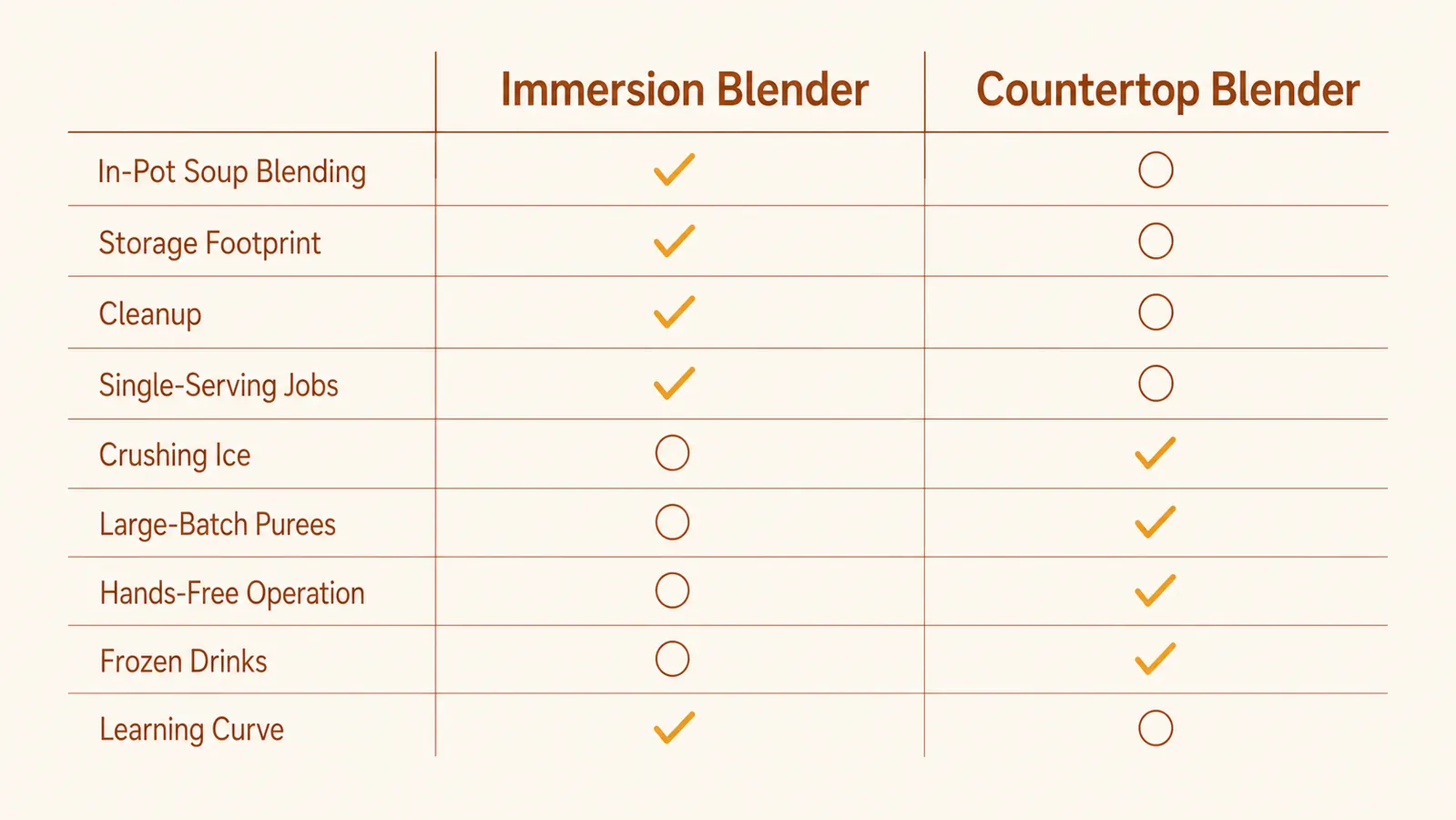
What I Actually Reach For, Task by Task
After using both side by side for months, the split in my kitchen has settled into something pretty consistent. Weeknight soups, pan sauces, salad dressings, single smoothies, and baby food all go to the Cuisinart. It's faster to grab and faster to clean, and it's already sitting in the drawer instead of needing to be hauled out from a cabinet shelf. Anything where I'm blending inside the same pot or bowl I already cooked in, the immersion blender is the obvious choice and I don't think twice about it anymore.
The countertop blender comes out for company, honestly. If we're having friends over and I'm making a pitcher of frozen margaritas or a big batch of gazpacho for six people, that's when it gets pulled down from the cabinet. It also wins any weekend I'm doing meal prep and want to blend a full week's worth of smoothie base in one go instead of running a small batch through the immersion blender five separate times. Neither tool made the other one obsolete. They just stopped competing for the same jobs.
The one place I went back and forth was mashed cauliflower and mashed potatoes. I tried both, and the immersion blender actually won that one for me, mostly because I could control the texture by eye right in the pot instead of over-processing a batch in a pitcher and ending up with something closer to paste than mash.
Who Should Buy Which
If you cook mostly for one to four people, make soup or sauce from scratch even occasionally, and you're short on counter or cabinet space, get the immersion blender first. It handles the everyday jobs of a small kitchen quickly and cleanly, which a countertop blender does not do nearly as well. For a lot of home cooks, especially in an apartment or a galley kitchen, it ends up being the only blender they actually need.
If you regularly make frozen drinks, crush ice, blend large batches for a family or for entertaining, or want one machine that handles thick, tough blends without a second thought, a countertop blender earns its space. My honest setup, and the one I'd suggest to most people who cook often, is the immersion blender as the daily tool and a countertop blender kept in reserve for the handful of jobs it actually does better. You don't have to choose one forever, you just need to know which one to reach for first.
A year in, I still haven't regretted downsizing my everyday blending routine to the Cuisinart. My old countertop blender didn't get thrown out, it just stopped being the default, moved to a cabinet, and now comes out for the handful of jobs it actually does better than a hand blender ever will. Having both on hand, instead of picking one and forcing it to do everything, is the part of this comparison that took me longest to accept, and it's the part I'd tell anyone shopping for either one to plan around from the start.
The Everyday Blender That Actually Fits in a Drawer
For soup, sauces, and small jobs, the Cuisinart Smart Stick does the job in less time with less to clean up afterward. Check today's price and current reviews on Amazon.
Amazon Check Today's Price on Amazon →