
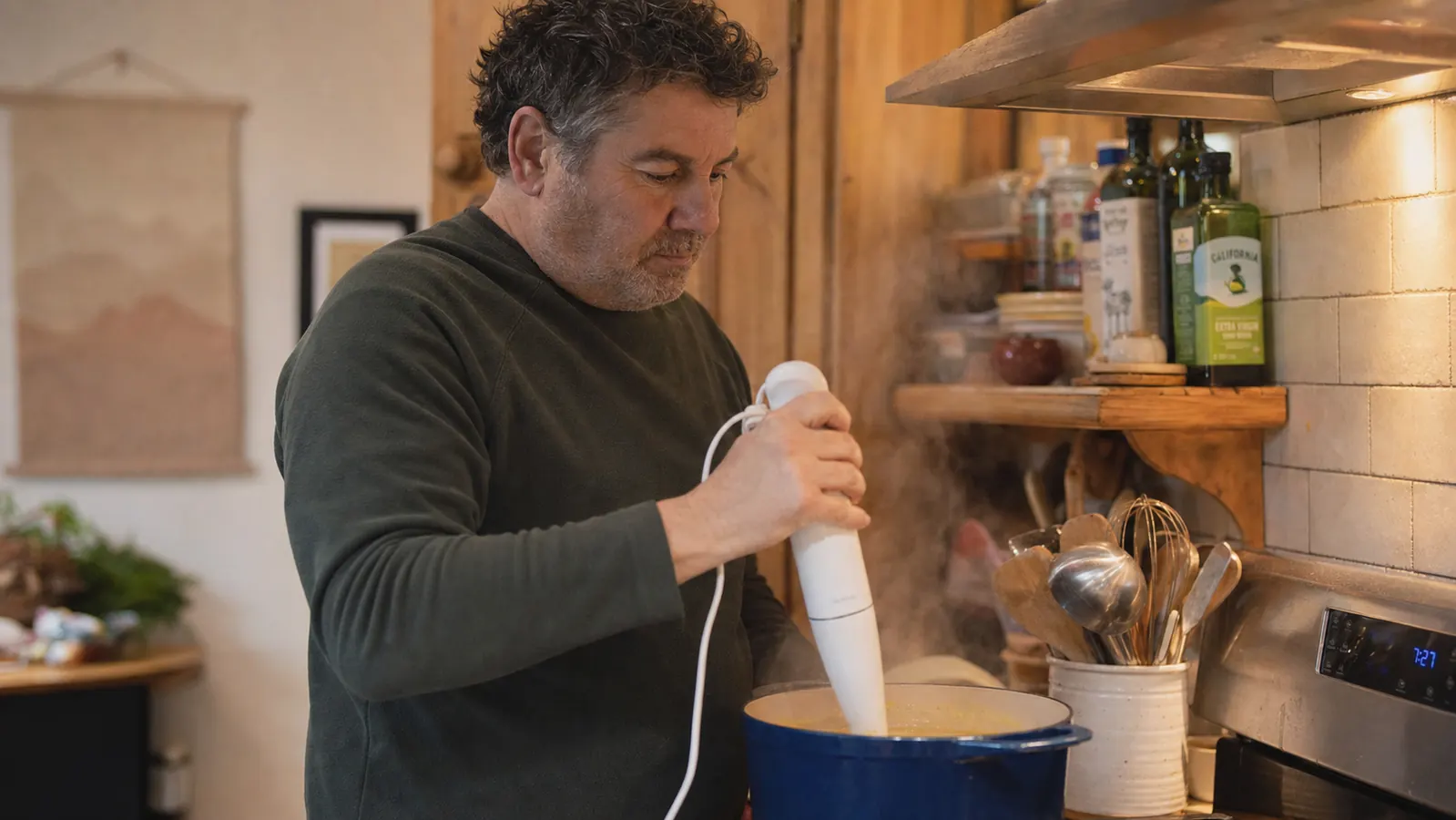
A good immersion blender earns its drawer space faster than almost anything else I own. For years I made soup the hard way. Cook everything in the pot, then ladle hot liquid into a countertop blender in batches, blend, pour it back, repeat, and clean a pitcher, a lid, and a gasket afterward. It worked, but it also meant soup was a project instead of a Tuesday-night dinner. The immersion blender changed that math the first week I owned one, because the blender goes into the pot instead of the pot going into the blender.
If you've only ever thought of a hand-held immersion blender as a one-trick soup tool, I get it, that's what I assumed too before I actually used one regularly. I go deeper on how it's held up over time in my long-term Cuisinart review, but here are 10 real reasons this specific blender keeps earning its spot on my counter instead of getting shoved to the back of a cabinet.
The blender that skips the whole pitcher-and-pour routine
The Cuisinart Smart Stick blends soups, sauces, smoothies, and baby food right in the pot, bowl, or cup you're already using, with two speeds and a 300-watt motor that gets through most jobs in under a minute.
Amazon Check Today's Price on Amazon →It blends hot soup right in the pot, no transferring required
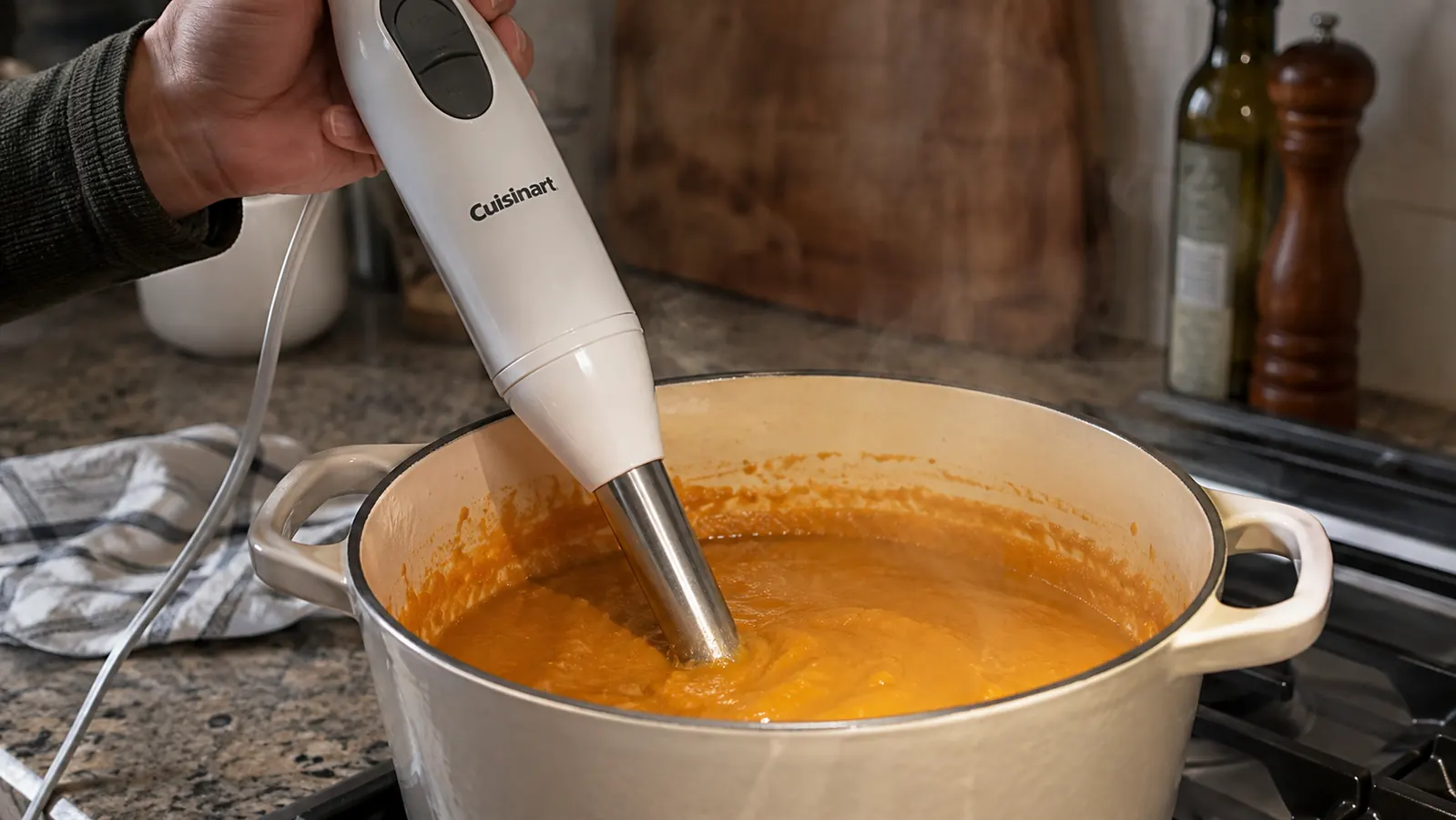
This is the reason I bought an immersion blender in the first place. Instead of ladling scalding soup into a countertop blender in careful batches, I lower the blending shaft straight into the pot on the stove, run it on the higher of the two speeds, and move it in slow circles until the vegetables break down into a smooth puree. No hot liquid ever leaves the pot, which means no spills, no steam-filled lid popping off, and no second dish to clean.
Two speeds cover more ground than you'd expect
I didn't think I'd notice the difference between one speed and two until I actually used both. The lower speed is what I reach for on smoothies and thinner purees, where I want control instead of splatter. The higher speed is for soups and denser mixtures that need more power to break down evenly. Having both on one hand-held blender means I'm not buying a separate tool for delicate jobs versus heavier ones.
It takes up almost no drawer space
My countertop blender lives on top of the fridge because there's nowhere else for it. The immersion blender is a single narrow wand that fits standing up in a drawer or hanging on a hook, and it's the reason I actually reach for it more often than the bulkier blender I have to lift down first. In a kitchen where every inch of storage is already claimed, that difference in footprint matters more than it sounds like it should.
It handles small batches a full-size blender jar can't
A countertop blender jar has a minimum amount of liquid it needs before the blades actually catch anything, which is a real problem when you're blending a single serving of dressing or a small cup of sauce. The immersion blender doesn't care how little is in the container, since the blending shaft goes directly into whatever cup, bowl, or jar you're already using. That's made it my go-to for one-off small jobs that used to feel like too much cleanup for too little result.
Cleanup is rinse-the-shaft, not disassemble-the-whole-blender
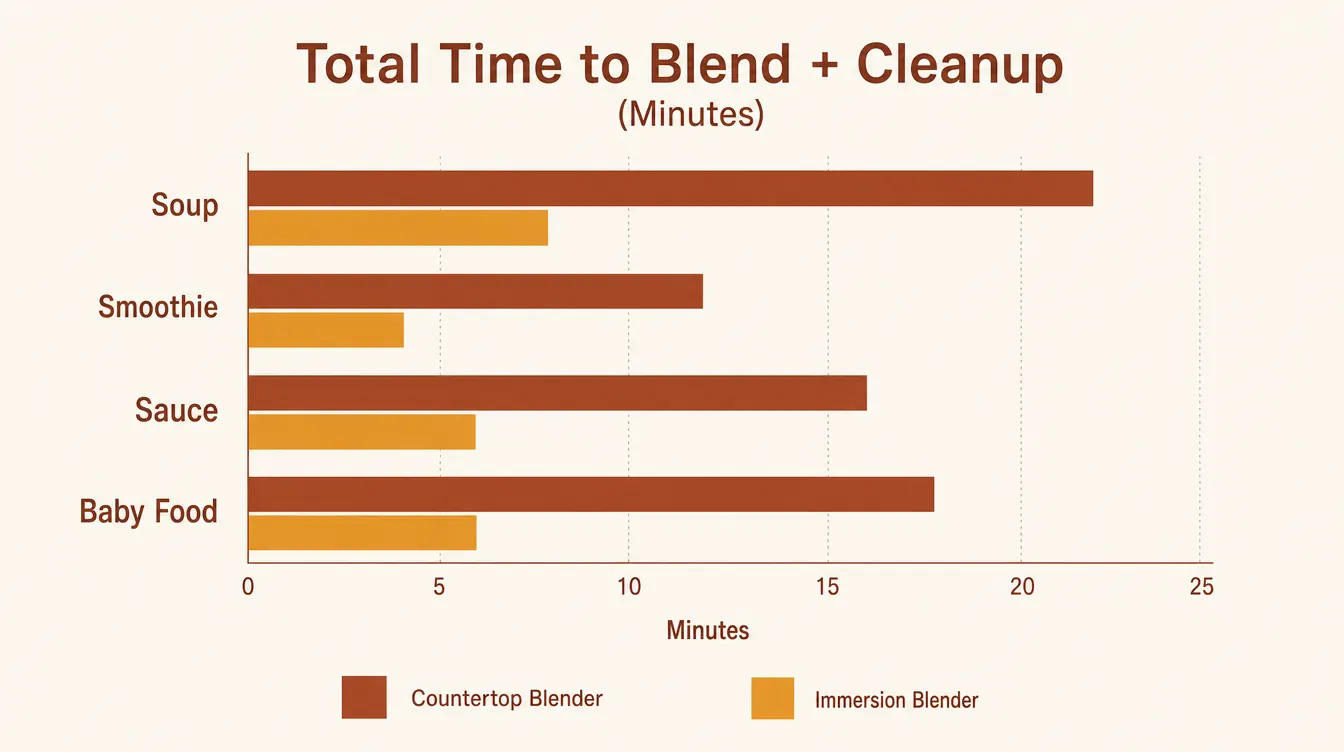
A countertop blender means washing a pitcher, a lid, a gasket, and a blade base, usually by hand because the pitcher is too big for most dishwasher top racks. The immersion blender's shaft detaches from the motor body and rinses clean under the tap in about ten seconds, or goes straight into the dishwasher. The motor housing itself never touches food, so there's nothing to wipe down beyond a quick pass with a towel.
It purees baby food without dragging out the big blender
When my kids were small, this was the tool that made homemade baby food realistic instead of a weekend project. Steamed carrots or sweet potato go straight into a small bowl or cup, the blending shaft goes in after them, and thirty seconds later it's smooth enough for a spoon. I wasn't hauling out and washing a full-size blender for two tablespoons of puree, which is exactly the kind of small, repeated task that decides whether a gadget actually earns its keep.
It blends sauces and dressings in the jar you'll actually serve from
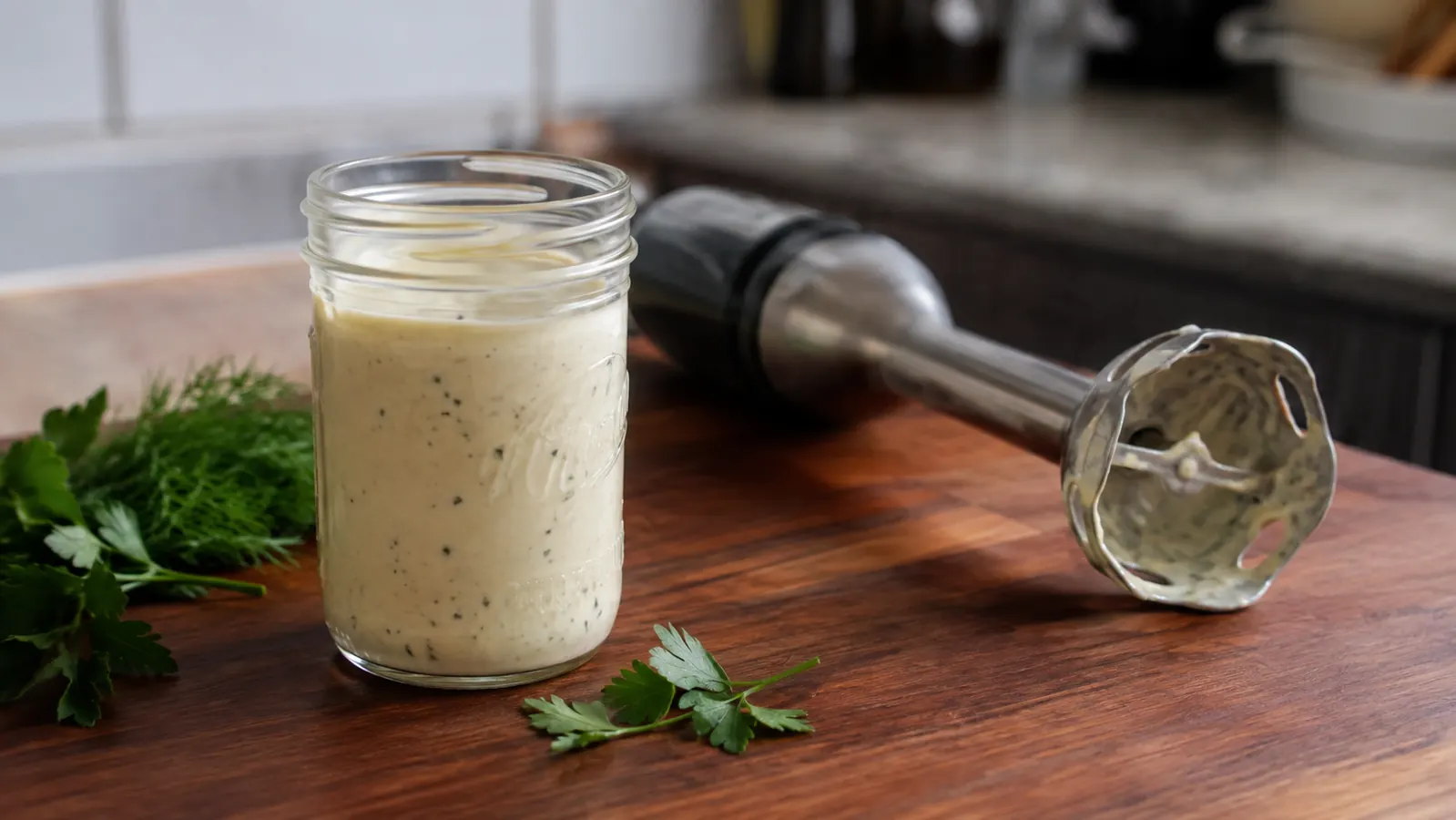
Homemade vinaigrette separates fast if you just whisk it, but a countertop blender feels like overkill for a half cup of oil and vinegar. I mix mine straight in a wide-mouth mason jar with the Cuisinart immersion blender, and it comes out fully emulsified in a few seconds. Same story for a quick aioli or a pan sauce, I'm blending in whatever container I'm going to store or serve it from, not creating an extra dish in the process.
One-handed control means you can steady the pot with the other
A hand-held immersion blender is light enough to run with one hand while the other holds the pot steady or keeps a bowl from sliding on the counter. That sounds minor until you've tried to wrangle a heavy countertop blender pitcher full of hot soup by yourself. Being able to brace the pot on the stove while blending directly in it is a small thing that removes a genuine bit of kitchen stress, especially with a pot that's still hot to the touch on the handles.
It's the tool that gets used on a random Tuesday, not just for a recipe
Plenty of kitchen gadgets only come out for a specific dish once a season. The immersion blender is different because the barrier to using it is so low. It's out of the drawer and rinsed off inside of a minute, which means I actually use it for a smoothie before work or to smooth out a lumpy gravy on a random weeknight, not just when a recipe specifically calls for one. I wrote about the moment that clicked for me in this story, if you want the longer version.
It replaces the countertop blender for most everyday jobs
I still own a full-size blender, but it mostly comes out now for crushed ice and thick frozen drinks, the jobs the Cuisinart immersion blender genuinely isn't built for. Everything else, soups, smoothies, sauces, purees, small batches, has quietly shifted over to the immersion blender because it's faster to grab, faster to clean, and doesn't need counter space cleared to use it. For most households, that covers the majority of what a blender actually gets asked to do week to week.
What I'd Skip
Don't expect an immersion blender to crush ice or grind whole spices, that's still a job for a heavier countertop blender or a dedicated grinder, and forcing it will just wear the motor down faster than it should. Don't run it in long continuous stretches either, short bursts of ten to twenty seconds with brief pauses get the job done and keep the motor from overheating on tougher blends. And never let the motor housing itself get submerged, only the metal blending shaft is meant to go into liquid. I learned to keep a firm grip near the top so I never dip past the waterline by accident.
I stopped hauling the blender pitcher over from the cabinet. Now the blender comes to the pot, not the other way around.
Ready to blend soup without the pitcher-pouring routine?
The Cuisinart immersion blender is the one tool that's quietly taken over most of my everyday blending jobs, and it's easy to find on Amazon at today's price.
Amazon Check Today's Price on Amazon →