
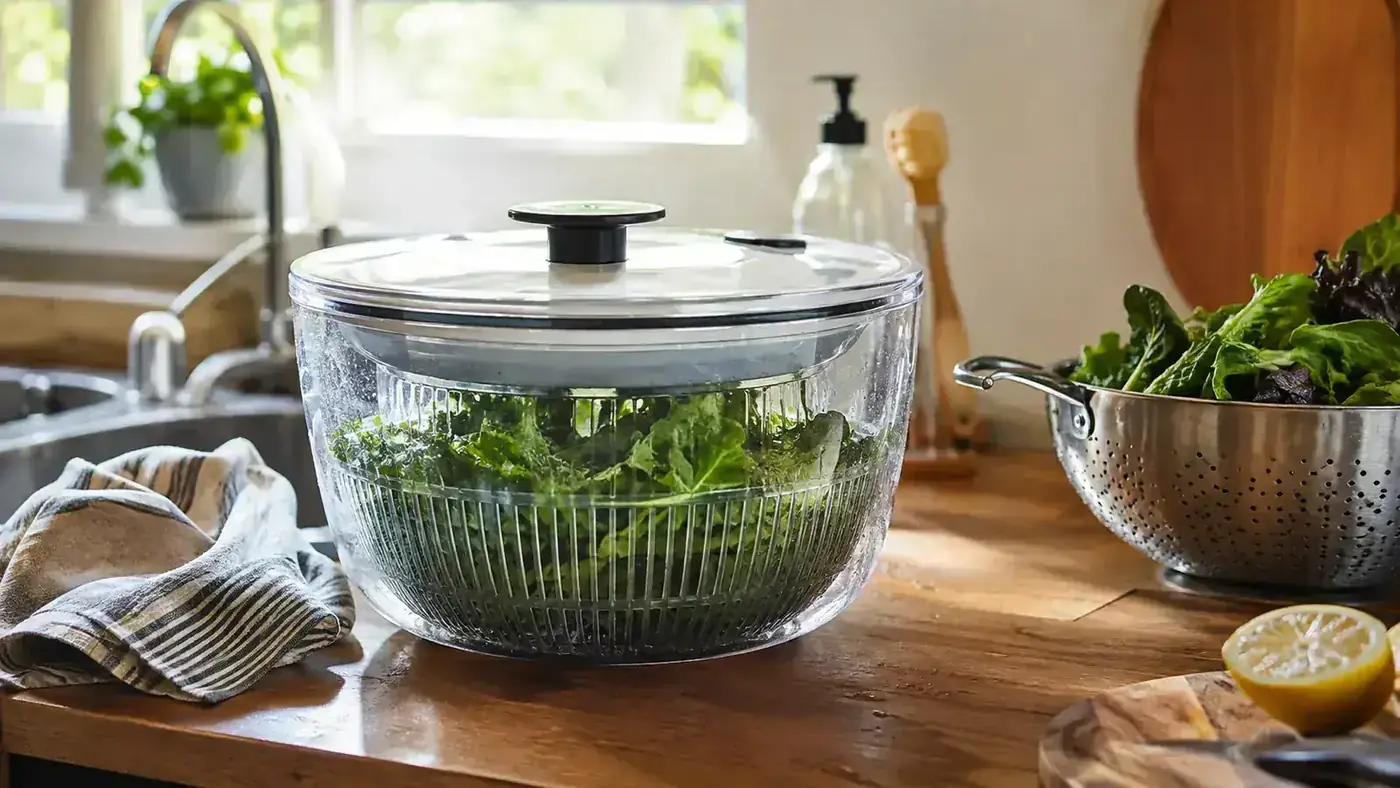
I bought the OXO Good Grips glass salad spinner about six months ago after one too many soggy salads made with lettuce I'd only sort of dried with a dish towel. Before that, my routine was rinse the greens, shake them over the sink, roll them in a towel, and hope for the best. Dressing never stuck right, and the fridge crisper always ended up with a puddle in it from bagged greens I hadn't dried well enough.
This isn't a first-week reaction to a new gadget. I've had half a year of actual washing, from everyday romaine and spinach to delicate herbs and a summer's worth of berries, to find out whether the OXO earns the counter and fridge space it takes up, because it's not a small tool. I want to walk through what held up, what didn't, and the one thing about this OXO spinner that I didn't expect to matter as much as it does.
I should say upfront that I'm not a professional cook. I'm someone who makes most meals from scratch for a household in an ordinary-sized kitchen with limited counter space, so every gadget I keep has to actually earn its spot. That's the lens this whole review runs through, not restaurant output, just whether a tool makes washing a bag of lettuce less of a chore.
The Quick Verdict
A genuinely well-built glass salad spinner that dries greens thoroughly and doubles as a serving bowl once the basket comes out, though it's heavier and bulkier to store than the plastic version it replaced.
Amazon Check Today's Price →Tired of Dressing Sliding Off Damp Lettuce?
The OXO glass salad spinner gets greens genuinely dry, not just less wet, so dressing actually clings instead of pooling at the bottom of the bowl. See today's price and current availability on Amazon.
Amazon Check Today's Price on Amazon →How I've Used It
I use this spinner every time I buy loose greens, which in my house is most weeks. Romaine and green leaf lettuce for salads, spinach for both salads and cooking, cilantro and parsley that I used to just leave damp on a cutting board, and in summer, strawberries and grapes rinsed straight before they go in a bowl on the counter. The pump top spins the inner basket, water flings out into the clear glass bowl around it, and I pour that off in the sink when I'm done.
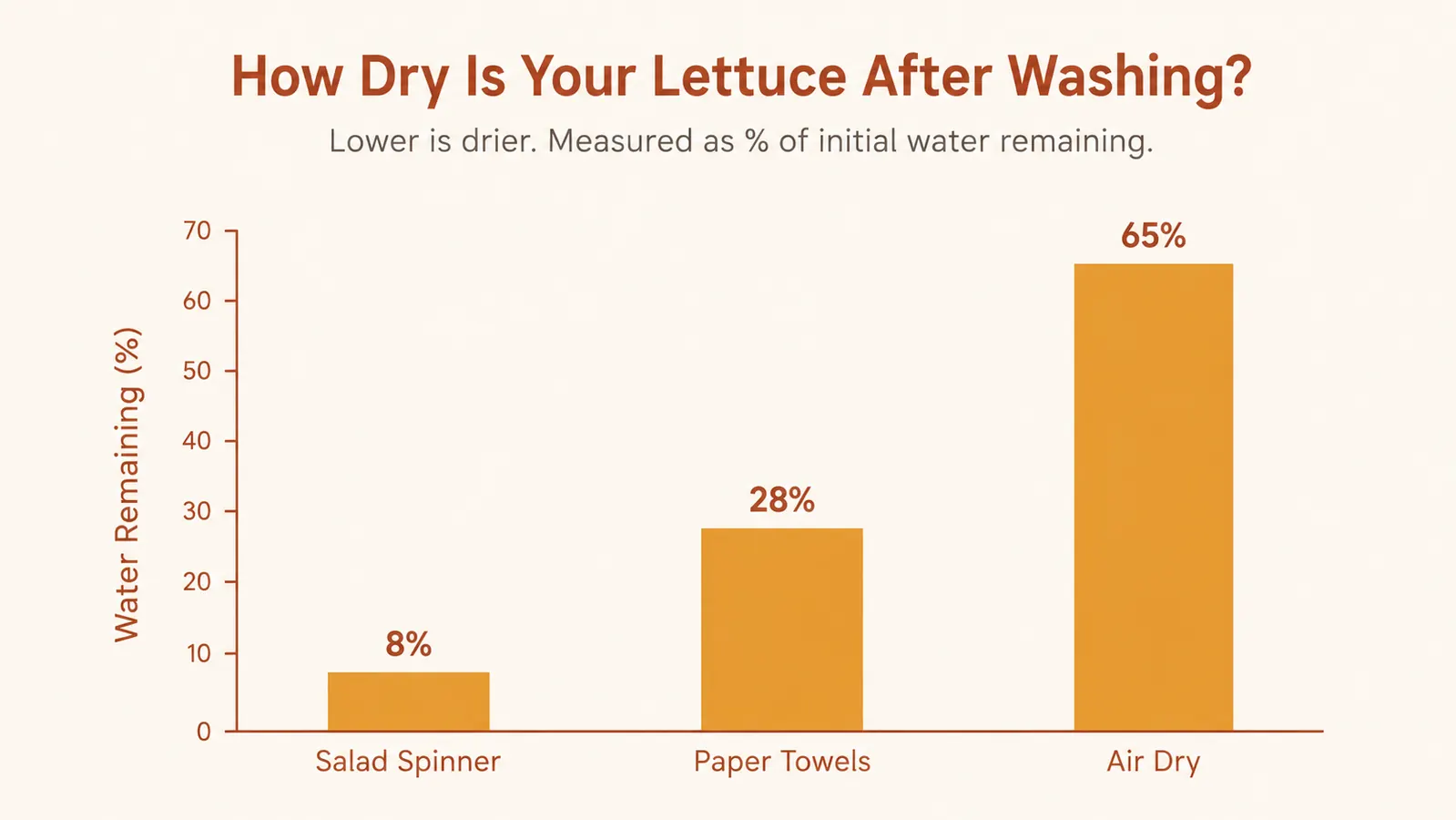
My routine settled quickly. Rinse the greens in the basket under the tap, set the lid on, pump a handful of times, check, pump a bit more if a batch is especially wet. It takes maybe thirty seconds longer than the towel method I used before, but the greens actually come out dry, not just less soaked, which is the whole point I was chasing when I bought it.
Six months in, the pump mechanism still spins the basket the same way it did on day one, no grinding, no slipping, no need to pump harder to get the same result. It lives on my counter next to the sink because I use it that often, which says more about how it fits into an actual routine than any single wash cycle could.
The Glass Bowl and What's Actually Different About It
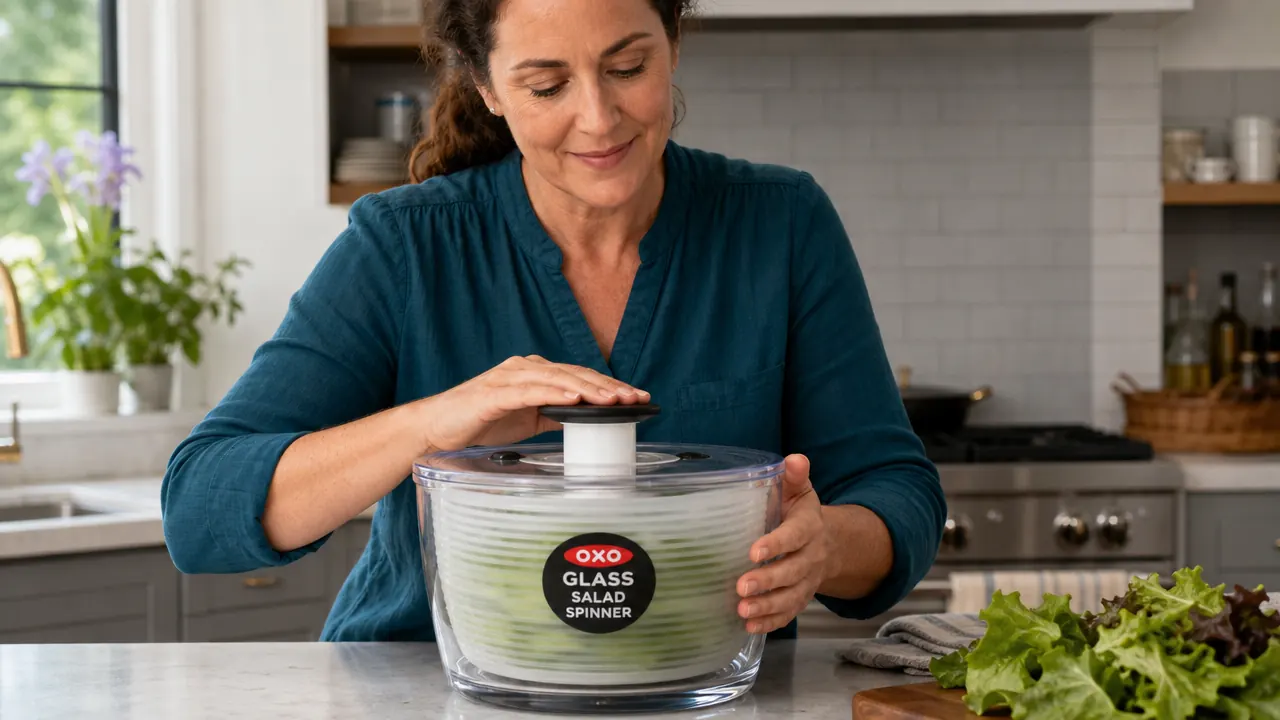
Most salad spinners I've owned before this one were plastic straight through, bowl included. The OXO's outer bowl is borosilicate glass, which is the same heavier, more heat-resistant glass used in a lot of measuring cups and bakeware. It's BPA-free by design, and it doesn't hold onto smells the way a plastic bowl eventually does after enough batches of onion or cilantro have sat in it.
The pump top is the part doing the actual work. Pressing down spins the inner basket at speed, and the basket itself is a perforated colander shape that lets water pass through into the glass bowl surrounding it. I compared this pump mechanism more directly against the pull-cord style I'd used for years in this longer honest review after six months of side-by-side use, since the difference in effort surprised me.
The basket lifts out cleanly from the bowl, which matters more than it sounds like it would. With my old spinner the basket and bowl were sort of fused in how they nested, and getting stray lettuce leaves out from between them was a small daily annoyance. This one separates in one motion, rinse both pieces, done.
What Six Months of Actual Drying Power Looks Like
The thing I actually measure a salad spinner against is whether dressing clings to the leaf afterward, and this one passes that test more consistently than anything I've used before. A batch of romaine, spun for a solid round or two of pumping, comes out dry enough that I can dress it right away without the dressing sliding to the bottom of the bowl in a puddle.
Herbs are where I noticed the biggest change in my own habits. Cilantro and parsley used to sit on a paper towel for ten minutes air-drying before I'd chop them, because wet herbs turn into a mushy pile under a knife. Now I spin them for a few pumps and they're ready to chop within a minute, no waiting around, no paper towels going in the trash every time I cook.
Berries are the use case I didn't expect to matter. Strawberries and grapes rinsed and spun dry hold up better in the fridge, less mush, less mold showing up two days later, than berries I rinsed and just left damp in a colander. It's a small thing, but over a summer of berry season it added up to noticeably less waste.
Delicate greens like baby spinach or arugula need a gentler touch, a few slow pumps rather than spinning full speed for a long stretch, or they bruise a little at the edges. Once I adjusted for that, it stopped being an issue, but it's worth knowing going in rather than finding out the hard way with a bag of arugula.
The Part Nobody Mentions: It's Also My Serving Bowl
This is the genuinely useful angle that took me a couple months to stumble into, and it's the reason this spinner earns more counter time than a strictly single-purpose tool would. Once the basket is out, the glass bowl underneath is just a good-looking, good-sized serving bowl. I wash the greens, spin them dry, pull the basket, toss everything with dressing right in that same bowl, and put it on the table.
That's one less dish every single time I make a salad. No transferring dried greens into a separate serving bowl, no extra bowl sitting in the sink afterward. For a 6.22-quart bowl, it's big enough to actually toss a full family-sized salad in without ingredients spilling over the rim when I stir.
It goes in the fridge just as easily. I've covered the glass bowl with a plate more than once and stuck a half-finished salad or a batch of washed berries straight in the fridge overnight, something I never would have done with the plastic spinner bowls I owned before, since those never felt like something you'd want to serve out of. Glass just reads as a real dish in a way plastic doesn't, and that's turned out to matter more to how often I use this thing than I expected when I bought it.
Where It Struggles
The honest tradeoff for that glass bowl is weight and bulk, and I want to be direct about it rather than bury it. This spinner is noticeably heavier than a plastic one, full stop. Carrying it from the counter to the sink to dump water out is a two-handed job in a way my old plastic spinner never was, and if it slipped off a counter onto tile, I have no doubt it would crack or shatter where a plastic bowl would just bounce.
Storage is the other real cost. It's a big, wide, glass-bottomed piece that doesn't nest flat or collapse down the way some plastic spinners do, so it takes up a fixed, fairly large chunk of cabinet space whether it's in use or not. In my kitchen it lives on the counter more often than tucked away, partly because I use it often enough to justify that, and partly because finding a cabinet slot for something this shape and size isn't trivial.
I've also learned to handle it with a bit more care than I give most of my kitchen gear. I don't set it down hard on the counter, and I'm careful lifting it out of a full sink of soapy water with wet hands. None of that has caused a problem in six months, but it's a different level of attentiveness than a plastic spinner ever asked of me, and worth knowing before it's sitting in your cart.

Alternatives I Considered
Before this I used a plain plastic pull-cord salad spinner for years, the kind that comes in most department stores for a fraction of what this one runs. It worked fine for basic drying, but the cord mechanism wore out faster than I expected, and the bowl was never something I'd consider putting on a dinner table. I broke down the plastic-versus-glass tradeoff in more detail in this list of what actually changes once you upgrade your salad routine.
I also thought about skipping a spinner entirely and going back to paper towels or a clean dish towel, which is genuinely free and takes zero storage space. It works in a pinch, but it's slower, it uses more paper towels than I like to admit, and it never gets greens quite as dry as a few pumps of this spinner does. For anyone washing greens only occasionally, that low-effort option might still be enough, but it stopped being enough for how often I cook.
A smaller plastic spinner with a similar pump mechanism was on my list too, and it would have solved the storage problem this one has. But after using the glass version daily, the serving-bowl trick alone made the extra bulk worth it to me. That's a personal tradeoff, not a universal one, and it's the single biggest factor I'd weigh again if I were choosing today.
What I Liked
- Dries greens thoroughly enough that dressing actually clings instead of pooling
- Pump mechanism still spins smoothly after six months of near-daily use
- Basket lifts out cleanly for easy rinsing, no trapped leaves between pieces
- Glass bowl doubles as an actual serving bowl once the basket is removed
- Works well beyond lettuce, herbs and berries both dry out and last longer
Where It Falls Short
- Noticeably heavier than a plastic spinner, especially carrying it full of water
- Bulky to store, doesn't nest or collapse down for a cabinet slot
- Glass bowl is breakable in a way plastic never was, needs a bit more care
- Delicate greens like arugula need a gentler pump or they bruise slightly
The glass bowl isn't just a bowl the basket happens to sit in. Once the basket comes out, it's the dish the salad actually gets served in, and that's the part that keeps this spinner on my counter instead of in a cabinet.
Who This Is For
If you buy loose greens or bagged salad regularly and you're tired of dressing sliding off damp lettuce, this earns its counter space. It's also a strong fit for anyone who cooks with fresh herbs often, since drying cilantro or parsley in seconds instead of ten minutes on a paper towel changes how often you actually reach for them instead of skipping the step.
It's a good match too for anyone who'd genuinely use a second serving bowl, since this one does double duty without extra dish-washing. I go through more of the specific ways an upgrade like this changes a normal week of cooking in this rundown of what a good salad spinner actually fixes.
Who Should Skip It
If your kitchen has very little cabinet space and every tool has to nest flat or store small, the size and weight here might outweigh the drying and serving-bowl benefits. A compact plastic spinner will get greens most of the way dry in a smaller, lighter package, even if it never doubles as something you'd put on the table.
It's also probably not worth the upgrade if you only wash a handful of salads a month, or you're already happy with a towel-drying routine. The real payoff here shows up with regular use, herbs several times a week, salads most nights, not the occasional bag of lettuce.
Six Months In, It's Still the Bowl I Reach For
If soggy greens and dressing that never sticks are the parts of salad-making you'd cut out if you could, this is the closest thing I've found to actually fixing both, wash, dry, and serve, in one bowl. Check today's price on Amazon.
Amazon Check Today's Price on Amazon →